Showing posts with label RESEARCH. Show all posts


CONCEPT
A fictional 10 minute short-film reflecting privacy of digital world and public data in 2017. Privacy is not about "to hide" - Privacy is about "to protect". I also wanted to show that you really never can get out of the loop once you have done wrong things in the past.

DESCRIPTION
Two best friends used to prank classmates in college using their social network data. Now they are university students, playing video games every Friday. One evening they meet and laugh about time in college, sharing how paranoid some classmates were. It was nothing very serious, only changing profile pictures on Facebook and sending naughty emails from other accounts, or just sending old archive photos. After one friend leaves his house, other goes upstairs and just takes a quick look online. A new chat window pops-up saying "Hi". He replies just for fun.
The conversation goes to the stage 1 where the money has been requested in one hour of time. Only GBP 50.00 but the guy just laughs and replies in a rude way. The stranger knows this guy and in a response includes some facts about his life.
Stage 2 requesting GBP 500 in exchange for peace.. He shuts the laptop, grabs the phone and calls his best friend telling how weird is this stranger.
Stage 3 - The young teenager receives a text message showing that the stranger wants to publish a private photo archive of him, the amount of money has been increased again. He agrees to pay, but only if they meet in real life. Old pub, main character sees a guy in his fifties sitting at the bar. The student asks to go outside to have a cigarette where his friend was waiting with a knife. Finally there are piece and they did not loose any money. then they both receive text:"STAGE 4 - It was just a joke, I still want my money".

CONTEXTUAL UNDERSTANDING
I think I really want to focus on technical side after graduation. I want to explore more of Adobe sweets. I will focus on camera techniques, use of colour, audio, lighting and editing. 

RESEARCH
I don't want to make this short-film like any other hacker film. there won't be any "Matrix" green binary codes. I want to make it more realistic and simple, how new users never protect themselves, they go against the rules by the saying "The best defense is the attack".

Research theories of surveillance.

Michel Foucault - Surveillance and Crime Control
Bentham - Surveillance and Critical Theory

New media does all so people think they have choices - therefore, their underlying thoughts and desires - are unique, rather than programmed and shared with others

TECHNICAL AND CREATIVE SKILLS
Adobe sweets, I want to use some new lighting techniques and learn more of audio.
At the moment I will use low key lightning and a camera that is good in low light conditions. (FujiFilm X-T2)


_______________________________________________________________________

How does anonymous connection works?


Okay...
I got the dancer two weeks ago. Replied to all questions and had a tutorial with Rosie. Because my initial idea has to be filmed using a fully able-bodied dancer we had some problems representing disability. Ethics and emotional feelings may be touched of someone who is actually a disabled dancer. Therefore I thought about messaging Stopgap community. I emailed 3 times and no response. It is the week before dissertation proposal should be submitted.

I finally got the email back. There is no reason to stop me film this idea... BUT - I have run out of time and I have to find a new way to finish this project.

I was helping Ivan with his project, I promised to be his camera operator. He offered me to collaborate and I agreed with a smile. I took over camera operator and editor role.

In the same time, I kindly said no to all dancers I had for my dance video idea...


White Wedding


White Wedding’s inspiration comes from marriages, and all the difficulties they carry. The video is set during the breaking moment of the couple, who lack affection and caress for each other resulting in the birth of pure evil.
White Wedding is a music video based on a broken love story, with a ‘dark comedy’ gist. It follows December and June a recently wed couple, they quickly realize their relationship is deteriorating over small arguments. Growing distant they chase each other throughout the corridors of the decaying mansion they once called a happy home. The chase sequence is created in cinematic montages for an opportunity to capture the decaying beauty of the old manor along with December/June’s outfits. As the video extends both June and December become increasingly rough and hateful to one another; it is then June gives birth to a pile of guts (evil) rather than the beautiful baby they once wanted, in return for their aggression, violence, and repulsiveness to one another.
“The greatest evil is physical pain.” – Saint Augustine

Planning career is something important to all of us. Once it is clean and understandable you are ready to go. I have been doing documents, portfolio, and my own business book for last year already. I call it "Business Book" for certain reasons. I can't include all my copyrights and photos and say that is my paperwork. I can't include my business cards and logos, copyrights and different client agreements and call it "Portfolio". Therefore, in my mind, I have the name which includes my contacts, website, logos, emails, documents, data and back-ups. That's a short story about me before this Career Planing tutorial.


CAREER PLANING

I learned important things that may not be pointed out anywhere else. They are different and new for me because I am originally from Latvia and these rules are not the same.


  • Opening a business account
  • Seeing an accountant, tax, and keeping accounts
  • Registering as self-employed or company
  • Key issues on setting up as freelancer or company
  • Market research and building networks
  • Self-promotion and marketing
  • Advice, support and business planning
  • Grants, loan and crowd funding
We were also introduced to Copyrights and Protection of our work. 
For me, it will be a huge game where I need to protect all my data legally.

I liked the lecture and I will be visiting our tutor in next year before I graduate. 
I pointed some good points of this lecture as well

  • Simple registration process with HM Revenue and Customs - fewer legal requirements
  • Low National Insurance and flexible tax relief and payments schedule
  • You can form a limited company later
  • Can employ others
  • Keep an eye on TAX and all your profit

I chose two very different videos that represent art in different centuries. The thing that I learned comparing them, no matter how old or new is the video - the idea will live further on. It might be and most likely is done again and again in different ways, using techniques that have never seen before, using post-production that may change the original message in many forms.

Dance is a performing art. It is like an active meditation. For me personally, dance is a relaxation, it is a circulation of energy (I am using my energy into physical motion and gaining it back through happiness). In my opinion, dance is like a music, it has its sequence. Dance can be a chaotic, coordinated, performed individually or in groups - it has no boundaries. Dance can symbolize deep feelings or everyday jokes, the value of which people do not think so much facing different problems or fun situations.


FIRE FLIGHT

Fire Flight is a promotional music video featuring the dancers from The Phoenix Dance Theatre in Leeds, England. The project was shot on the Phantom Flex camera at 1,000 frames per second. It was produced by Ink Films (www.inkfilms.co.uk) and the creative and director by Uber Agency (www.uberagency.com).


Directors idea was to add fire in the post to make it look like dancers have been set alight. The project took just over a year to complete with 6 months being dedicated by Ben Daure to create the rendered fire in Maya. Daure had never even opened Maya before and it was Chris Birks of VTR North that showed him how to use the program allowing him to focus on creating the fire post work. The video was edited using Maya, After Effects and Adobe Premiere.

Phoenix Dance Theatre is the UK’s longest standing contemporary dance company outside of London. I think the video stands out and works for the dancers how hard-working they are... Phoenix Dance Company was formed in 1981 by David Hamilton. Almost 40 years of work has been filmed in this art-piece to reach attention to their achievements over the years.

Watching this video, I try to notice all those tools they have used to implement the movement. VFX has been used a lot and it works amazing bearing in mind that the editor has never been using Maya before. I like the fire because it reminds my eyes where the motion was a second ago. It leaves a trace after every motion the body does. It is something that performer is in front of every thought.

GIRL HUNT BALLET

Fred Astaire and Cyd Charisse, 1953. This dance piece is from the musical film “The Band Wagon (1953)”.

First, it reminded me music videos of Micheal Jackson. It is very different from the first video. It is more theatrical performance art. The power the man use to show his personality has been reflected using the group of people. I think it reflects world's idea what makes his or her personality. It is not the position but the people who are around you. For example, the leader of the country can come in the room and no one will stand up, later on, another leader is coming in and everyone will stand up and will give an honor to him or her. It is about the respect from others not about the name of the position. In this dance video, it is well performed. The main guy is in a light gray suit. Everyone around him is in black. The red colour in the room sets the mood to anger, to some actions. He is challenged later on by a lady in red dress. That is his opportunity to be more powerful over others. He uses it and there is a competition between both dancers. 

It well though out. Starting from lights and environment. Using different outfits, ages and using specific space. ending with an actual story behind it, ending with changes and interesting actions that turns out differently than expected.

As I mentioned in previous posts, our installation is presenting the result of evil behavior. It is about the communication nowadays... The source can be completely innocent so as the speaker, but the messenger is the one who makes the rules. Particularly in our installation, the way of changing the message is cleared in three ways.

Still playing with the spread of information we wanted to base the piece on the passing and delivery of words, how things said by others can’t be monitored nor controlled. In the piece, you are viewing five separate screens working as a vocal circuit. Four of the Screens act as distributors of information. Starting from the left (Screen 1) something is said, moving along it reaches the middle screen, upon receiving the news the middle screen reacts, the reaction is later heard/seen by another passing on the story. The middle screen acts as a Breeder and Target for gossip it plays a victim of rumor. Shocked by the words it has come to hear, it addresses the viewer with the words “just between you and me” in hope to seal the spreading; in natural fact, nothing stays private. The circuit loops again, middle screen reacts with anger “Beat the shit out of a pillow” yet making another headline.

CIRCUIT

I am working together with Ivan and at the very beginning, we both agreed what are our roles. Ivan is the author of pictures and digital drawings. He was in charge of characters. Meanwhile, my role was "HOW TO MAKE IT POSSIBLE?". To learn 3D animation in less than one month - I did not know how able I am to do it, so I did not risk it. So, Ivan found a solution, he showed me video of Micheal Jackson and I decide to look deeper into the production process

Having in mind this interesting video I look for another. Each video took my attention more and more.


After a good research, I found out what is Morph Motion - Still to Still. Soon I had a RE:Flex plugin on my Adobe After Effects.

I run few tests and realized that on trial version nothing is going to work. It put a huge cross over the image - watermarked.

Having this problem made me think of ways around it. So I came with a solution to generate huge pictures, edit them with the watermark and then just crop needed frame in Adobe Premiere.

I ended up with 11.5K footage on my computer. All videos and sequences were about this size leaving portrait area for FULL HD resolution. 1080x1920p PORTRAIT!

I watched tutorials how to use RE:Flex motion morph for different files - videos, still images and animations. I was very into this technique and I am glad I explored it. First tests went bad, but I got use to it. One portrait took me about 4 hours to turn sideways and open its mouth.

What motion morph does is basically takes the points defined by me and blends together with the image next. I have to go frame by frame and move shapes that are different for two frames between.

Here is a video that is taken for 4.5 hours.

In total, I made fully 6 portraits. Morphing and later on exporting through Adobe Premiere in .MOV H.264 1080x1920p 25fps.

After generating motion from still, it was time for motions. Each motion was trimmed separately like sequence. It was more like a sequence of the sequence of the sequence. Files on files.
As you can see. For each face, I had approximately 22-30 masks and each mask has to be keyframed. Well, that would be easy, but each mask, like layer for hair consisted of 200 points which need to be separately moved because masks are changing their own shape. 

In my opinion, we set roles very clever. Ivan was in charge of characters. As soon as he finished one face I began to draw shapes and move pictures in After Effects. I think his process was not easier, all layers and texture took a long time. Meanwhile, I was working with different sizes, trying to figure out pixel ratio and frame times in certain seconds. 

We had issues, particularly my Adobe crashed for like 5 times. 

I would say that I was excited by the process learning a new technique... but closer to the end and I got very tired. Every single point needs to be checked in all frames, keyframed every single second and because of different drawings, all shapes changed their form every single frame. 

It was challenging, even more, because of something I have never been aware of. I got new experience and a feeling of great teamwork. 

Studio shoot begun with a post weeks ago 'Role- Camera Assistant' - that was my chosen role to research. We had to research individually each department to present for everyone what the roles in film industry actually means. I was happy with my role, because I am technically interested in gear and techniques to use for filming. I have always been passionate about pushing the limits of quality.  I like to generate ideas of stories and main concepts, but it has never been as big as it is about my obsession for technology.

Camera department is my role indeed. I like the looks I could technically achieve. I like to challenge myself to make the shot more stable, more crisp, more detailed, more dynamic, more interesting and exciting. In my spare time I am reading a lot about new editing styles, new lighting, technology and filming techniques. I love to read articles of new Adobe Photoshop updates, how old tools can be used to achieve something new. There is always something new to learn. I am following latest updates of cameras, I am loving to learn new features. For example, I worked with GH4 and that was a good reason to find out what its features means - v-log and 4K MAX. I had what is the difference. Soon I was on articles and YouTube videos. I research from very beginning to advanced controls of V-log and 4K Max features.

I like to always be on top of everything that lately comes out. Before something has been released I have most likely already take a look on specifications, researched certain parts of camera's or other gear's features and trying to understand without looking at actual device. 

I guess my friends call me crazy because of doing it, but that's how I see art behind film, sound and photography.

Returning back to roles, for studio shoot I picked the role - Camera Operator. I guess could not wish any better, I was happy with my role at the very beginning.
 Pre-production was a pain for everyone I guess. I was pretty calm because I knew that my real work will be on the scene. Although I was CO, I helped Tarald a lot with the storyboard.

I drew storyboards with a help form Ivan, Natalie and TJ. When they were done I made them digital. I also helped Umor with lighting plans. We discuss in groups and explained those to Anne Parisio. I took part in lighting plans confidentially cause I had experience on sets like this before. Mostly for small interviews in Latvia, but still - those were whole scenes for full lightning including reflectors and diffusers. I used to help out gaffer at local television in my hometown Talsi.

As I mentioned before, I love research a lot of new techniques and gear, so I have seen many lighting situations and problems via Youtube and Fstoppers.com. I am learning film standards when I do have spare time.
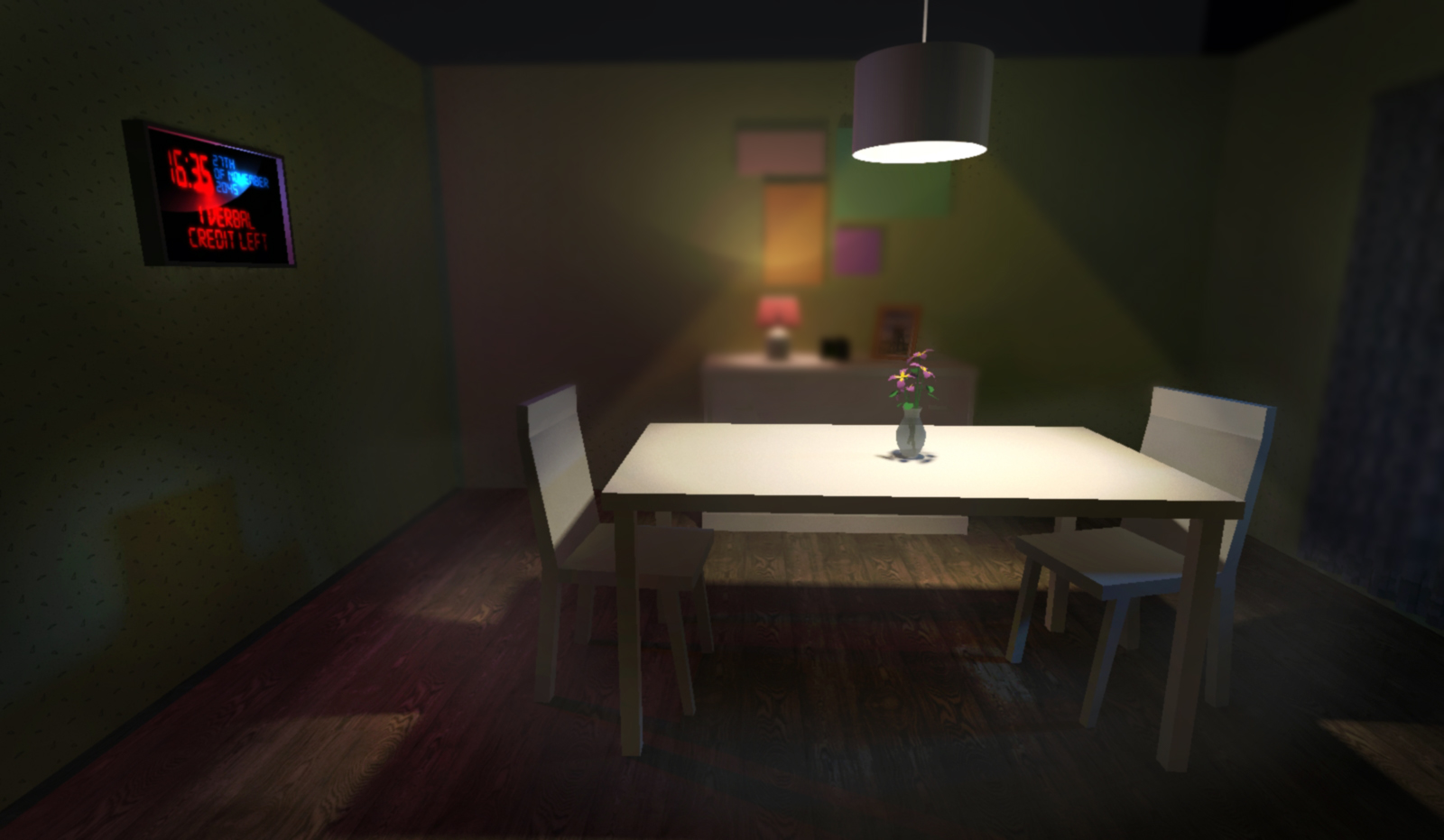
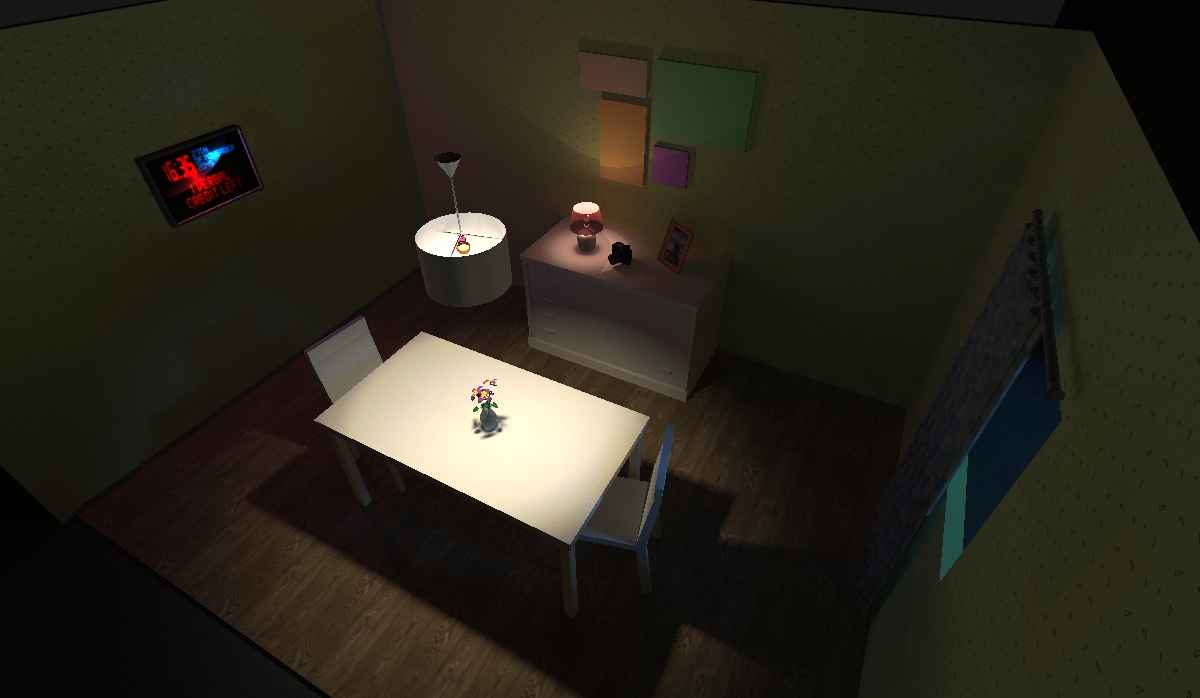
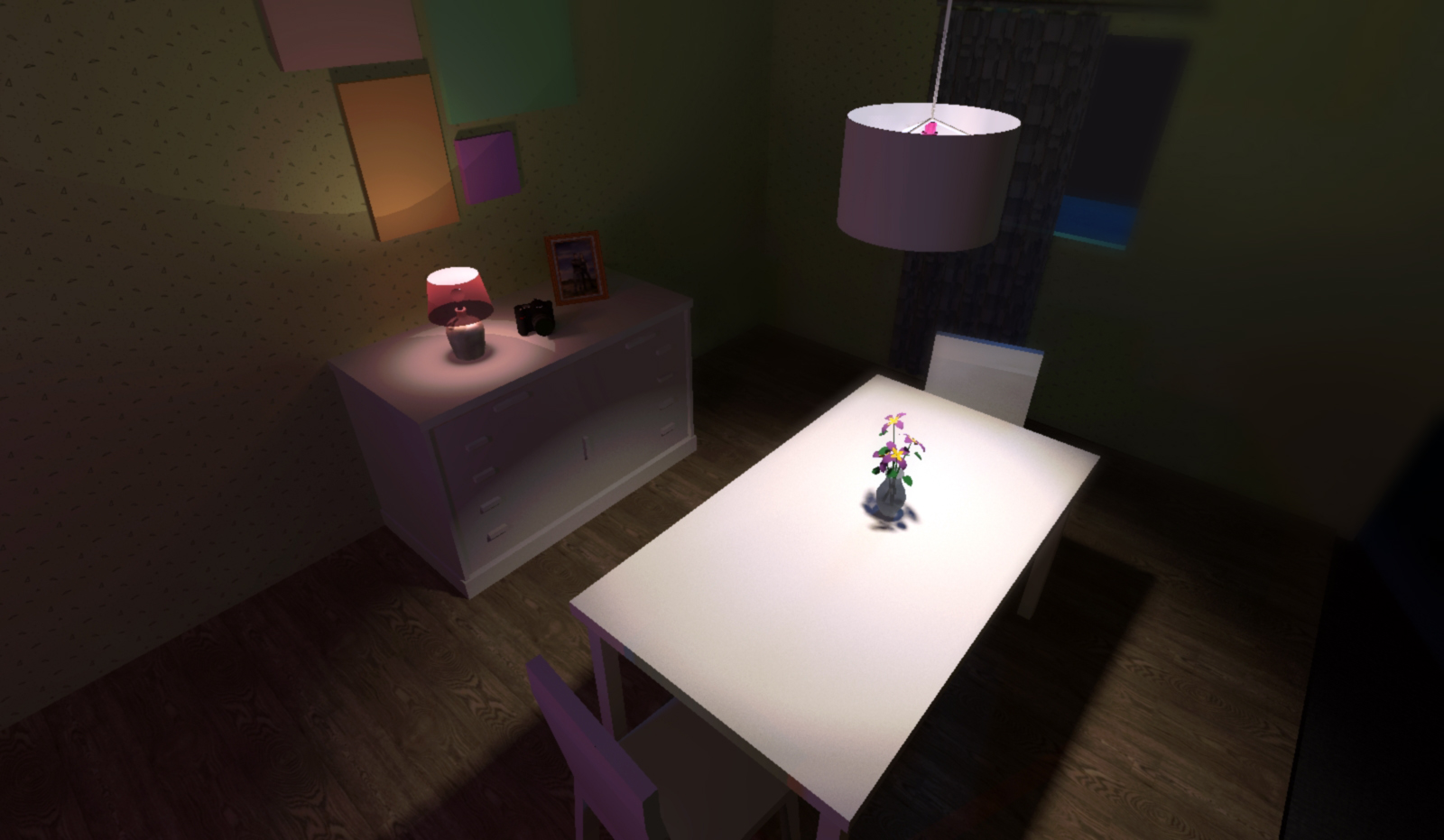
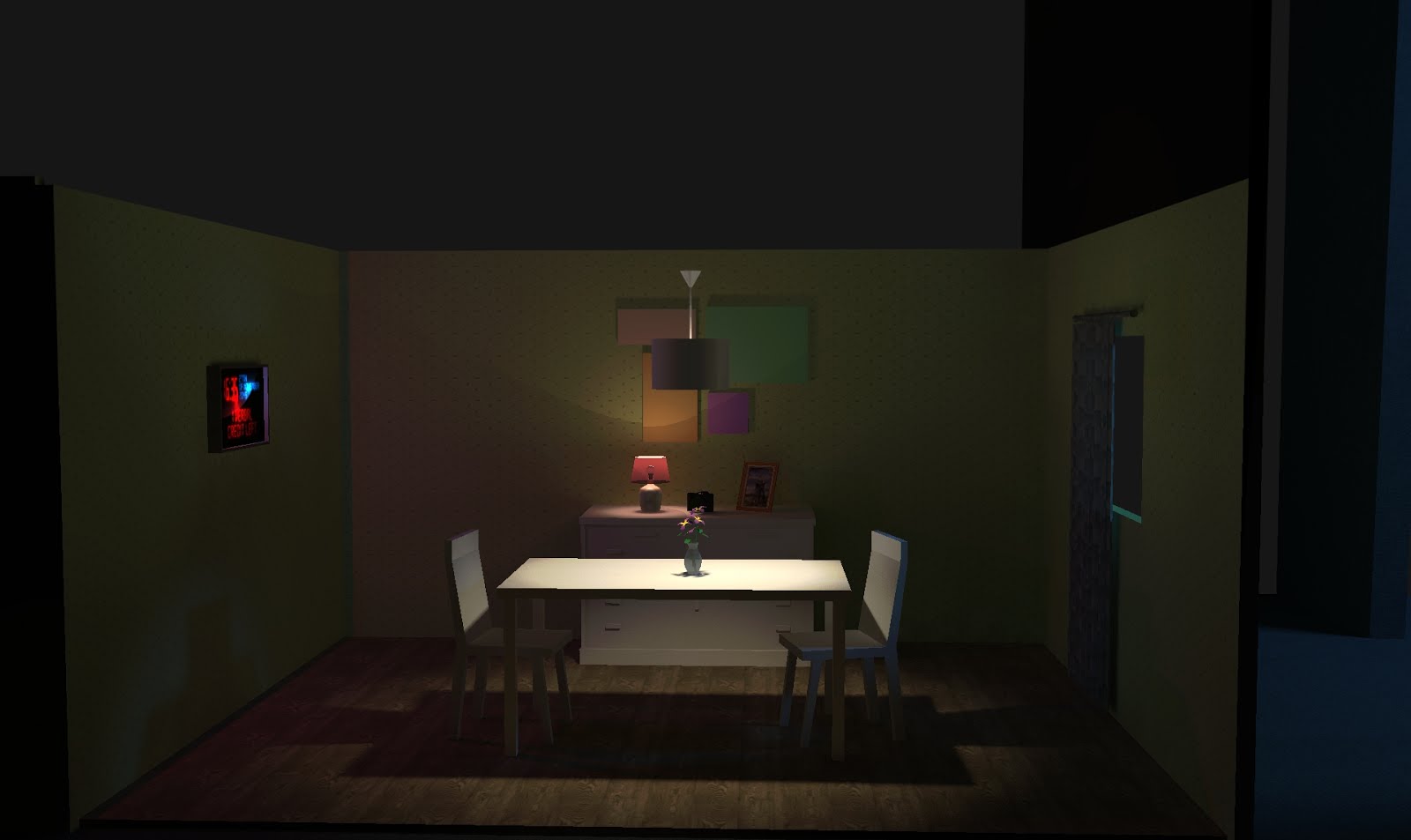
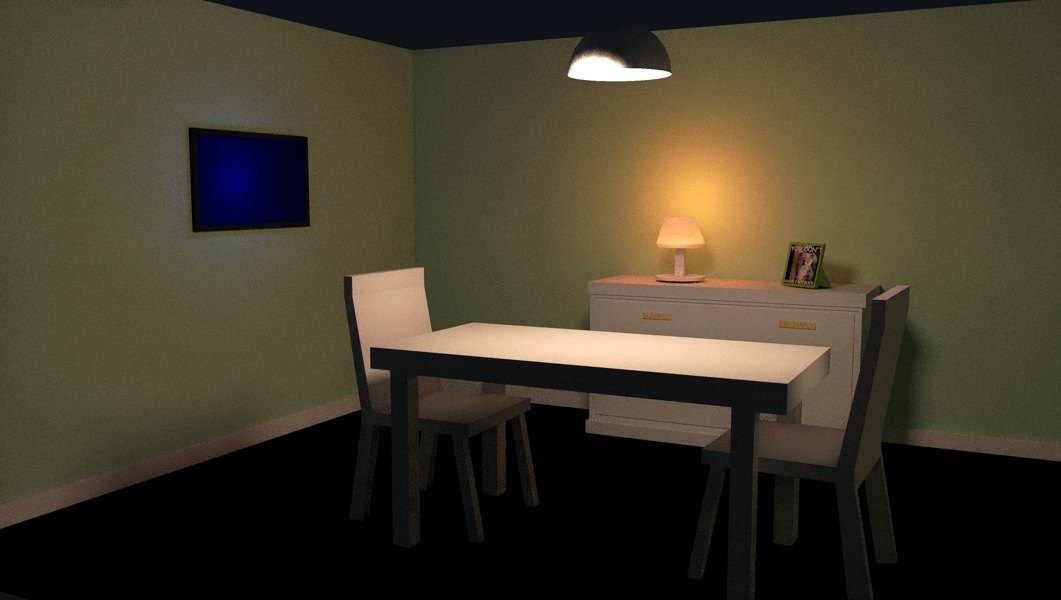
 While everyone was into polishing the story, I used my time for 3D project using SketchUp Pro.
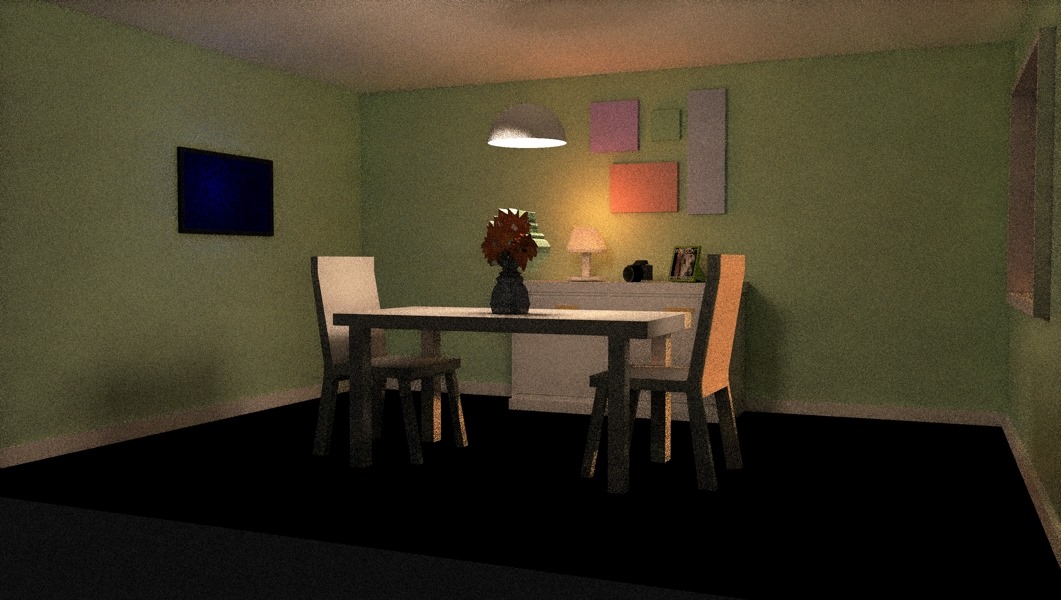
I made a whole set to show previews for possible camera angles and lighting. These sketches and previews from 3D program is at the bottom of this post.

WAS 3D NEEDED?

It was not necessary, but in my view it helps a lot for whole team to understand and feel a bit of the taste what they are going to look at. It can help a lot to see some problems, possible movements, angles and actual space they have to bear in mind.
I did it to make sure I am helping my team as much as possible. We have to put our support and time as much as we can to make our film successful!

Another digital thing I did together with Preston. Something must be on TV's screen. Animation. Preston did design for the clock and whole system which shows word count. My role in this was to make clock alive. I used Adobe Photoshop, After effects and Adobe Premiere to easy change the certain time and move alerts. We setup the word count and made animation so it looks interactive.
...This only one test for alarm. I made folders of files to make sure there is no mistakes and animation makes everyone happy.


See No Evil, Hear No Evil, Speak No Evil


It is a Chinese saying, referring to the three monkeys of their divine pantheon. In another way, one can say indeed that if one tries to be positive in word, deed, and thought, that one can avoid doing evil and also avoid falling into the traps of the wicked. The evil ones fall into their own trap for seeing, thinking, listening to , and doing evil. In the film: Planet of the Apes with Charlton Heston, these three famous monkey poses are actually referred to in the ape trial of the human. Mainly because these three behaviours are considered as major sources of evil in themselves. I would say that our installation is presenting to the audience the result of evil behaviour. It is about the communication nowadays... Source can be completely innocent so as the speaker, but the messenger is the one who makes the rules. Particularly in our installation the way of changing the message is cleared in three ways.


HEAR NO EVIL - you can hear it, just don't pay any attention to it
SEE NO EVIL -  you can either cover your eyes and literally not see it, or pay no attention
SPEAK NO EVIL - You often can't help when you hear evil, especially rumours about others, speak no evil is about that you shouldn't repeat anything further.

Doing evil will be represented through 5 screens. On each of them - one person. As I said above, the source is innocent, follows three “monkeys” and the speaker:

Screen 1: a victim (the source)
Screen 2: a policeman (the monkey)
Screen 3: a journalist (the monkey)
Screen 4: a news editor (the monkey)
Screen 5: a news reporter (the speaker)


TV screens not projectors? Audience is always more satisfied of physical things that they can view from different perspectives. If the artwork is explorable, it takes the person more into the message that artist wants to tell. That's our main goal - To deliver our idea and our thoughts to the viewer more efficient and much faster. We gather that physical installation is much more powerful and more interactive than just a projection on the wall.


To make some ideas of screen positions we took a look to other artists.


Valie Export, video installation at Charim Galerie, (2012)
TV screens are on many tables facing towards audience. It takes a lot attention but in same same the number of screens disturbs the viewer and making focus on many visuals.
Another installation that inspired us was made by Andy Warhol: Motion Pictures at The Museum of Modern Art, 2010.
Andy's work took us because of portraits. Our problem will be showed through portrait series on the screen. It is interesting way to deliver the message. People usually try to look into faces while getting the point of speech or emotional expression, meanwhile others actually try to avoid that, complete opposites, which could be also related to one of the monkey's behaviour “See no Evil” or “Hear no Evil” - trying to ignore the message and keep enjoying the artform.

PAPER WORK:
Arturs Reinholds Learning Agreement


First Camera Assistant | 1st AC or the Focus Puller


It can be the hardest job on the crew. While everyone else is on a break, the Camera Assistant is usually working. Camera Assistants are usually the first people to start work and the last people to finish.

Main things they have to focus on:
1. Adjusting the camera lens or 'pulling focus' to follow the action on set
2. Managing and maintaining camera equipment and accessories
3. Following instructions from the Director or Director of Photography (DoP)

But to do all that you have to have excellent knowledge of cameras, lenses and all related equipment. He or She has to do a lot of homework, keep up-to-date with newest techniques and equipment. They have to be good at judging distances, have agility and speed. they have to pay precise attention to details. As the last but not less important they have to know about health and safety legislation and procedures.

What does a First Camera Assistant do?
1st ACs are responsible for focusing and refocusing the camera lens as Actors move within the frame of each shot. They do not look though the lens to do this but 'pull focus' according to a set of complex marks placed on the set.
As it is impossible to see whether the focus is sharp until the rushes (raw footage) are screened, 1st ACs rely on experience and instinct for each focal adjustment. Because re-shooting scenes is expensive and actors may be unable to recreate their best take

1st ACs are also responsible for camera equipment such as lenses, filters and matt boxes and for assembling the camera and its accessories for different shots.

They arrive on set or in the studio before the Director, Director of Photography and Camera Operator and ensure that the camera and all required lenses are prepared for the day's shoot. If the Director or DoP wants to try out a specific lens, the 1st AC assembles the camera so that they can look through the eyepiece to assess the shot. At the end of each shooting day, 1st ACs clean the equipment and pack it up in preparation for the next day.
____________________________________________________________________________________________

Second Camera Assistant | 2nd AC or Clapper Loader


Main things they have to focus on:
1. Preparing the camera, loading new batteries and film, and changing lenses
2. Operating the clapperboard and managing the camera paperwork
3. Working closely with the 1st AC rest of the Camera team

To be able to that they have to have to know about all camera equipment, film stocks and processing techniques. They have to have understanding of all camera department paperwork and administration. that's why they have excellent organisation skills. They have to be fast, communicate effectively, focused on details and also know about health and safety regulations and procedures.

What does a Second Camera Assistant do?
2nd ACs help the Camera Operator to position and move the camera. They are responsible for loading and unloading film magazines, changing and charging camera batteries and changing lenses. They must work quickly so that the flow of filming is not disrupted.

They also operate the clapperboard, fill out and file all camera sheets, deal with film labs and order the correct amount and type of film stock.

During the shoot, 2nd ACs begin work early in the mornings, unloading, organising and preparing all of the camera equipment for each day's work. During rehearsals, they mark-up the Actors' positions, enabling the 1st AC to calculate any changes in focus. When the camera starts to roll, 2nd ACs mark each take with a clapperboard, which identifies the take and enables the Assistant Editor to synchronise the sound and picture in preparation for editing.

2nd ACs position themselves next to the camera, where they can anticipate all camera movements and monitor how much film stock is being used. They must know when a new film magazine should be prepared. At the end of each shooting day, 2nd ACs pack away all the equipment, label up film cans and dispatch them to the labs with detailed camera sheets.


Brian Helgeland

He is also a successful writer and director, born in Providence, United States.

Although he says something else about himself, "I’m not a writer; I’m a filmmaker. If I wanted to be a writer I’d be a novelist. If I wanted to write dialogue, I’d be a playwright. But I want to make films so I’m a film-maker; I’m no different than a costume designer, or a DOP, a director. I make movies for a living."

He very well known because of the film "42", the story of Jackie Robinson from his signing with the Brooklyn Dodgers organization in 1945 to his historic 1947 rookie season when he broke the color barrier in Major League Baseball. I have seen this film and it takes me into the scene right away.

I think it is already a huge research and talent to make something that realistic from 1945. Helgeland has played around very well facing the racism which was the biggest obstacle for many talented black people. 
He makes the same realistic feeling again with the environment and actors in the film "Legend", a British gangster thriller about the exploits of the Kray twins. Rising from London's underworld to become unlikely celebrities at the height of the swinging 60s. I think that Brian Helgeland has explored human relationships, history and politics to direct a film something like "Legend" or "42".
"I always think a movie is a giant funnel, as big as this building, with a little tiny pinhole at the bottom and everyone, whether it’s the production or whether it’s the screenplay, you fill this enormous funnel with all the stuff and one drop comes out and that’s the movie or the script when it’s the script. The more you dump into that funnel to get that drop, the better it’s going to be. It doesn’t mean it’s going to be any good, but that’s a whole other thing."

I would say, watching his films it takes in different universe. Every single detail shows how precise he is in his work. A huge research of politics, historical facts and human relationships is leading to result that blows everyone's mind. 

Human networking? Brian is interested in different countries. He tries to relate each area to people that lives there. His grandfather was a Norwegian, who moved to United States. Since he knows that he explores and tries to find points that works together in history. 


In his films like "42" he involves a lot of signs of politics and historical facts. He has explored environment to the smallest detail. In my opinion his key for films is perfectionism. I want to say that the films I have seen has been made very detailed visually and historically. I love his patience. 
"42" placed in 1946, Jackie Robinson is a Negro League baseball player who never takes racism lying down. Brian gives the viewer a sense of time, identity for each person in a film. Very well done work and a huge research under it...


Steve Rodney McQueen


He is an English director, video artist, screenwriter and producer, known for 12 Years a Slave (2013), Shame (2011) and Hunger (2008). For his artwork, McQueen has received the Turner Prize, the highest award given to a British visual artist. He has also won an Academy Award, BAFTA Award for Best Film, Golden Globe Award for Best Motion Picture - Drama.


He has never been interested in pleasing mainstream tastes, but no matter how uncompromising his work, it keeps becoming more and more popular. People describe him as a very polite and businesslike person.

McQueen's film pitilessly documents the beatings, lynchings, rape and brutality of a slave-owning class half-demented by its own moral corruption, and routinely reduces audiences to tears. "There's been a kind of amnesia," he says, "or not wanting to focus on this, because of it being so painful. It's kind of crazy. We can deal with the second world war and the Holocaust and so forth and what not, but this side of history, maybe because it was so hideous, people just do not want to see. People do not want to engage."

HIS PERSONALITY AND LIFESTYLE SPEAKS FOR ITSELF - Maps & Networking. He always explored and tried to understand how things works together.
I found out how much McQueen uses nature of authority. He studied a lot of human senses. How they react, how they resist. He says that the human body is the art itself. He explores human relationships and tries to involve that in his films a lot.


In one of the interviews from The Guardian he admits that the reason why he reflects these relationships could be his memories. "This is hard because I'm going back to certain times in my life I haven't really thought about for a long time. And maybe I avoided that because it was always a very difficult time in a way, and a lot of people were damaged on that journey, friends of mine. And it was all because of people not giving a fuck." He was ignored and left with his own opinions alone.
About his childhood I found pretty interesting quote for that time, "Authority was good, that wasn't a problem. I wasn't a troublemaker, I was good. I was one of the cool kids, on account of being big and good at football". But in same time he admits that the most powerless in his life he felt during the time in school, it was horrible.


"I was a painter before, and it was always about the frame, of course. But within this frame, somehow, because of movement, because of things passing through the frame, it seemed to have a life bigger than the actual frame itself. That's the thing that gave me the passion to sort of want to make films." - Steve McQueen


Steve Rodney McQueen has explored a lot about the history. Reading his notes you can tell how  much he feels a shame and embarrassment about the history. 

His work "12 years a slave" shows politics and history more than anything else. Very powerful movie in my opinion. It shows slavery form different perspective letting audition feel like being there in the same time with everyone else. 

12 Years A Slave is based on a book McQueen's wife came across while he was working on an idea about a free African-American from the north kidnapped into slavery in the deep south. A prosperous black New York businessman, drugged by traffickers and sold into slavery, who escaped 12 years later and published a memoir detailing the horror of Louisiana plantation life.

I am not really into the history but watching the movie everything feels natural and real. Every single scene let us feel the motion of that time. How politics work at that time. You have money and power, you do whatever you want. Money was the power over humans. The racism and horrible attitude made the history that nobody wants to bring up.