Showing posts with label SOUND. Show all posts

The Wolf of Wall Street

It is a 2013 American biographical black comedy crime film directed by Martin Scorsese. The screenplay by Terence Winter is adapted from the memoir of the same name by Jordan Belfort and recounts Belfort's perspective on his career as a stockbroker in New York City and how his firm Stratton Oakmont engaged in rampant corruption and fraud on Wall Street that ultimately led to his downfall.


Here I was, sitting at the desk and drawing circles around this title. I did not know where to start and I basically did a brainstorm. Draw things that I could relate to this film. I watched a documentary about the real wolf of Wall street who has represented in this adventure movie.


Okay...
I was ready to draw all props in illustrator... BUT
before that, I promised myself to find music. A soundtrack that works together with the time when these events that are represented in a film happened.

I chose
The Dead Weather - Hang You From the Heavens
But that was not it. It has a lot of lyrics and parts that were very repetitive, so I put the audio in Adobe Audition and cut it in pieces. I also add some effects on drums and edit the transitions...
I worked on levels and on stereo channels to make the video more immersive.

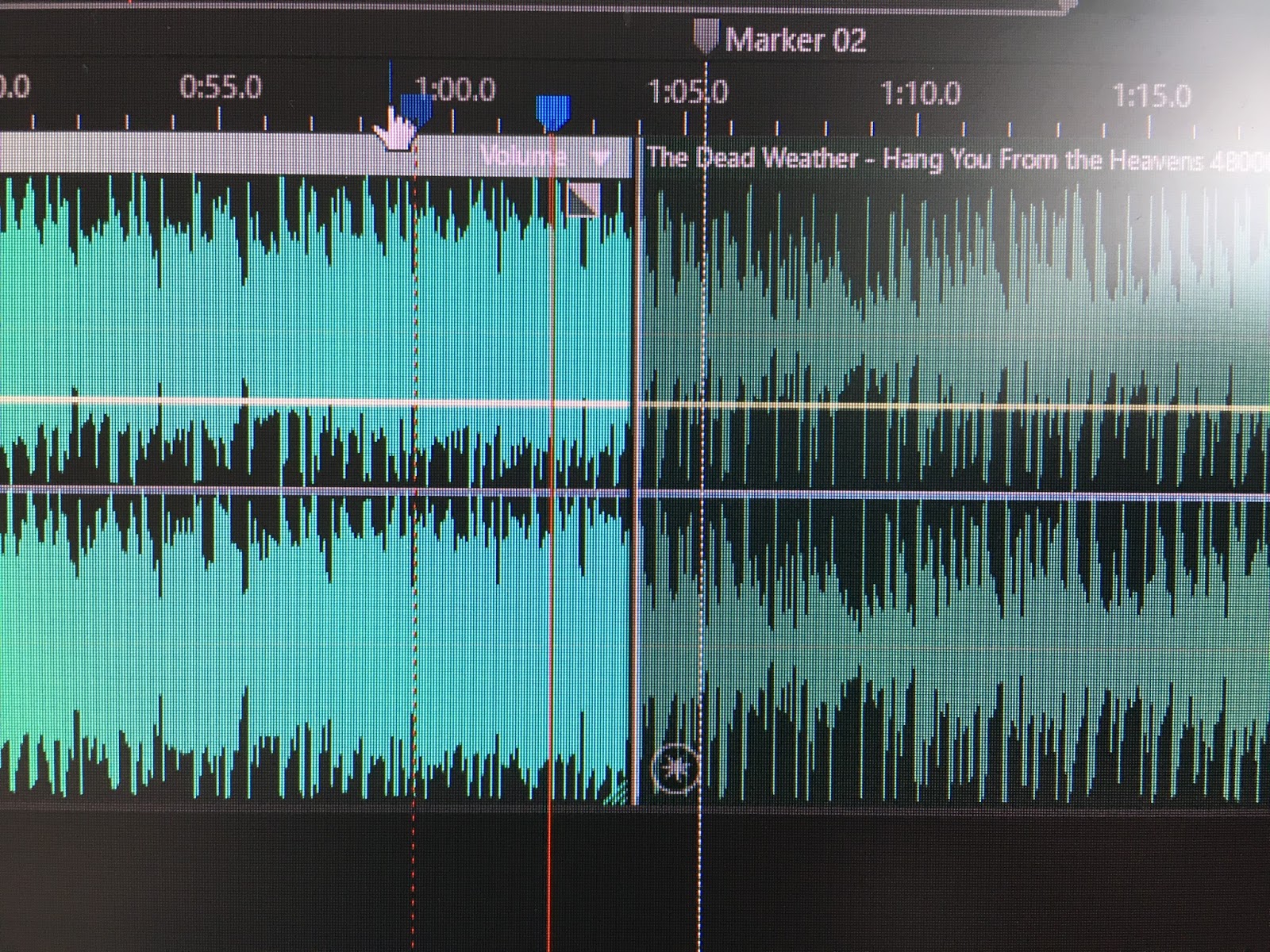


I actually went back time to time while I was editing the actual animation. I wanted some bits longer and some bits shorter, therefore I worked on both programs at the same time.

Next part was doing all illustrations.
I started with a bus. That's how the film starts with a young guy in an NYC bus looking for better life.

My inspiration comes from intros
Catch Me if You Can Opening Title Sequence
I liked the simple look and use of colour.
I loved the transitions the most, they are very clever and you cannot predict the next one.

Next - title sequence of Kiss Kiss Bang Bang


Position all layer in 3D space using After Effects was not challenging, I did it once with a bus and everything else was just natural. I got use to the points and axes very quickly.

 I used some silhouettes of buildings to represent big city
 All animations I keyed to change the speed more realistic.
 Here I am changing speed for bus animation and camera
 Many moving layers. starting from a wheel to the whole city.
I animated in a rhythm of the soundtrack. I like pop-up texts and seamless transitions for animation. I liked bright colors and very simple backgrounds. I used a lot of compositions, so the actual project contains 2D and 3D compositions. Some were moving, some were just stills moved by keyframes.

TITLES
I wanted very simple and visible font. I did large scale letters to be readable in time they are on the screen. Each title was replayed many times to make sure that it has on the screen for long time enough, but at the same time not for too long time. I find very annoying if titles are too long on the screen. I like that it is possible to read the text and still appreciate the animation.

I very liked the process of keyframing the camera angles. I have to say that the longest process in the whole project was the illustrator. I spent around 10 hours learning it and about the same time to make all shapes you can see in the next blog post.

As I mentioned in previous posts, our installation is presenting the result of evil behavior. It is about the communication nowadays... The source can be completely innocent so as the speaker, but the messenger is the one who makes the rules. Particularly in our installation, the way of changing the message is cleared in three ways.

Still playing with the spread of information we wanted to base the piece on the passing and delivery of words, how things said by others can’t be monitored nor controlled. In the piece, you are viewing five separate screens working as a vocal circuit. Four of the Screens act as distributors of information. Starting from the left (Screen 1) something is said, moving along it reaches the middle screen, upon receiving the news the middle screen reacts, the reaction is later heard/seen by another passing on the story. The middle screen acts as a Breeder and Target for gossip it plays a victim of rumor. Shocked by the words it has come to hear, it addresses the viewer with the words “just between you and me” in hope to seal the spreading; in natural fact, nothing stays private. The circuit loops again, middle screen reacts with anger “Beat the shit out of a pillow” yet making another headline.

CIRCUIT

I am working together with Ivan and at the very beginning, we both agreed what are our roles. Ivan is the author of pictures and digital drawings. He was in charge of characters. Meanwhile, my role was "HOW TO MAKE IT POSSIBLE?". To learn 3D animation in less than one month - I did not know how able I am to do it, so I did not risk it. So, Ivan found a solution, he showed me video of Micheal Jackson and I decide to look deeper into the production process

Having in mind this interesting video I look for another. Each video took my attention more and more.


After a good research, I found out what is Morph Motion - Still to Still. Soon I had a RE:Flex plugin on my Adobe After Effects.

I run few tests and realized that on trial version nothing is going to work. It put a huge cross over the image - watermarked.

Having this problem made me think of ways around it. So I came with a solution to generate huge pictures, edit them with the watermark and then just crop needed frame in Adobe Premiere.

I ended up with 11.5K footage on my computer. All videos and sequences were about this size leaving portrait area for FULL HD resolution. 1080x1920p PORTRAIT!

I watched tutorials how to use RE:Flex motion morph for different files - videos, still images and animations. I was very into this technique and I am glad I explored it. First tests went bad, but I got use to it. One portrait took me about 4 hours to turn sideways and open its mouth.

What motion morph does is basically takes the points defined by me and blends together with the image next. I have to go frame by frame and move shapes that are different for two frames between.

Here is a video that is taken for 4.5 hours.

In total, I made fully 6 portraits. Morphing and later on exporting through Adobe Premiere in .MOV H.264 1080x1920p 25fps.

After generating motion from still, it was time for motions. Each motion was trimmed separately like sequence. It was more like a sequence of the sequence of the sequence. Files on files.
As you can see. For each face, I had approximately 22-30 masks and each mask has to be keyframed. Well, that would be easy, but each mask, like layer for hair consisted of 200 points which need to be separately moved because masks are changing their own shape. 

In my opinion, we set roles very clever. Ivan was in charge of characters. As soon as he finished one face I began to draw shapes and move pictures in After Effects. I think his process was not easier, all layers and texture took a long time. Meanwhile, I was working with different sizes, trying to figure out pixel ratio and frame times in certain seconds. 

We had issues, particularly my Adobe crashed for like 5 times. 

I would say that I was excited by the process learning a new technique... but closer to the end and I got very tired. Every single point needs to be checked in all frames, keyframed every single second and because of different drawings, all shapes changed their form every single frame. 

It was challenging, even more, because of something I have never been aware of. I got new experience and a feeling of great teamwork. 


That is how it looked in the Adobe Audition. I recorded and mixed everything in 32-bit 96000 Hz and later on down sampled to 24-bit 48000 Hz.
I did a lot of reverb, panning and volume key-framing.

All I wanted to achieve I did. I wanted surrounding sound, sound that makes you feel that you are in the same place with the objects. I did a story that builds up slowly and ends quickly after screams. I learned about level controls reading two books Sound for Digital Video by Tomlinson Holman and Arthur Baum & Theory and Practice Film Sound by Elisabeth Weis and John Belton. both books describe that I should keep my levels down and make very pleasant sound, in that way I can make my audience focus on the actual subject.

My final edit (-10 dB):


Seeing picture of a person sitting on a chair and with widely open mouth lets me think only about the screams. I was looking for story. Therefore, I decided to leave the screams at the end. I wanted to build up the sound, showing how the person gets where he is painted. I love audiovisual parallelism, it helps me feel the image, even if it is still, I can picture different patterns, feel the material, feel the room or space.

For tips and tricks I chose to look up in few books. For actual form and rhythm I took notes from 'Cinesonica: Sounding film and video' by Andy Birtwistle. Read how important is actual space where the sound is recorded, for example, in a room it will be more high and low pitch noise, where outside it will be more of low and mid frequency sound.

MAKING A STORY

In my mind was going only one idea. How the person got there? Because of facial expression that shows screaming I made another person in the room.
I star my story with a person walking outside while it is raining so it would be clear that it is completely different environment. The person grabs keys and opens the doors. While it washes his hands, there is another person pulling his fingers on the glass. Trying to make noise and receive response from another side. He is more like a hostage who tries to escape, but the person who just came in wants him to sit down. He has the power!

I would like to use something that sounds like electric chair. Connecting wires and make the Pope screaming. Last minutes of his life.

RECORDING

OUTSIDE - screams, doors, keys, rain.
INSIDE - scratches, voice, glass, doors, electric impulses, chair, breathing, running water.

EQUIPMENT - ZOOM H2n and ZOOM H1 recorders.

Using headphones, I made an effect, that it feels very realistic. I recorded with Zoom H2n to make 3D sound. Whispering and screams are made stereo into real environment. for water, breathing and door opening I used pan effect.

Sorting out files:
 Named them:

My sound project is based on the portrait of Pope Innocent X, is an oil on canvas portrait by the Spanish painter Diego Velázquez. Pope Innocent X was born at Rome, 6 May, 1574; died there, 7 January, 1655. His parents were Camillo Pamfili and Flaminia de Bubalis. The Pamfili resided originally at Gubbio, in Umbria, but came to Rome during the pontificate of Innocent VIII. [1]

I chose Francis Bacon's most famous paintings inspired by Velasquez's Pope Innocent X portrait. [2]
The work shows a distorted version of the Portrait of Innocent X painted by Spanish artist Diego Velázquez in 1650. The work is one of a series of over 45 variants of the Velázquez painting which Bacon executed throughout the 1950s and early 1960s. The picture was described by Gilles Deleuze as an example of creative re-interpretation of the classical. [3]

Diego Velazquez's painting on the left and Francis Bacon's on the right.

The insertion subverts the encapsulation of power and self-assurance projected by Velázquez. The screaming mouth, isolated from other facial features and divorced from any narrative context, suggests existential agony. The pathos of human vulnerability and loss of faith or conviction are accentuated by the precisely rendered space frames in many Bacon images of popes, which make the figures register as ‘enclosed in the wretched glass capsule of the human individual’, to cite the evocative phrase used by the philosopher Friedrich Nietzsche in The Birth of Tragedy (1872), one of Bacon’s favourite books.[2]

I was more into the Popes biography, but it seemed really secret. Therefore I choose to find out why Francis Bacon wanted to show him screaming, what was the reason and is this is somehow interacting with his sexuality?

Bacon’s obsessive reworking of the papal theme suggests that it may have possessed further significance and perhaps psychological charge for the artist in relation to his sexuality. It has been remarked that the Pope in official garb is in a sense the ultimate drag queen, or less literally that depictions of the Holy Father, known in Italy as ‘il Papa’, may encapsulate Bacon’s traumatic feelings about his own father. The latter was a conventional, inflexible military man to whom the teenage Bacon had felt sexually attracted, as he recalled many years later, but who brutally admonished and rejected him when he discovered his son’s homosexual inclinations. Such speculations about the possible ‘subconscious’ content of the pope pictures involve perhaps a rather crude application of the methods of Freudian psychoanalysis. Once again it is neither altogether possible nor helpful to pin Bacon down.

[1] http://www.newadvent.org/cathen/08020b.htm
[2] http://uk.phaidon.com/agenda/art/articles/2013/february/08/the-truth-behind-francis-bacons-screaming-popes/
[3] https://en.wikipedia.org/wiki/Study_after_Vel%C3%A1zquez%27s_Portrait_of_Pope_Innocent_X