Showing posts with label INSPIRATION. Show all posts

Why marionettist?

A disabled person?

Does it make sense?


WHAT IS DANCE FOR ME

Okay... I think for many of us a word "Dance" means physical movements in certain sequence, a beautiful way to express emotions, and maybe for someone it is just an art-form and nothing else. For me personally, it was a passion - I loved to be there in an action. When I dance my body never lies. Expressed emotions is in those movements. I stopped dancing when I came to study at UCA. Dancing takes time and if you want to do it, you have to do it properly, you have to give all yourself. Once you start doing it, there is no way back, you will like it later, if you did enjoy it before. 

For me dance brings me in different stage. I do not know how to describe very well, but when I am in this motion I feel as a different person. I used to dance folk dancing in Latvia for 14 years of my life. I started when I was 5. Our dance culture is very orientated around dances with a partner. It is a very interesting feeling when you know that someone else is moving in same direction, doing same arm movements, jumps and rotations in the same time. It feels wonderful. I have to say, it feels wonderful when you know the choreography. Learning steps, positions and small details like where your head will be looking at takes time. It sometimes was a painful process. I remember being very exhausted in the middle of the training and the teacher says:"Come on, stand up. Let's do it again!" That repeats for many times and the energy is just going down and down. Learning technique for hours, sometimes for days and even weeks. I believe it is just part of what dance actually means! I lived that moment and I think it is all about the passion...

  Great dancers are not great because of their technique, they are great because of their passion. - Martha Graham

 THE IDEA BEHIND A DISABLED PERSON

I was thinking of the unit a lot, how to make this idea interesting. I thought of folk-dancing, I have archive footage, I could do some dancing myself as well...But nothing was what I want.

On the last days before tutorials with Rachel I thought about possibilities for movements, traces what we leave behind us. The idea itself was not really clear. I wanted something around real life situations and simulating that with a dance movement. Basically using VFX compare two different motions. Human abilities to a car or a fruit that drops on the floor. Seeing how these objects reflects human body.

During the week I came up with another idea. What if human being starts to explore motion. How would it look like in reality if someone has never moved before.....AND I stopped there, because I really needed a background for my research... It simply did not make any sense...I tried to think of options, what is very different from a person who can do anything, use his body with no boundaries?


DISABLED PERSON

Active lifestyle and a disability is not what we try to imagine together.
How does it look? A dance with limits. Limitation is a challenge.

I think, people don't like to think of something they cannot achieve because of different limits. Limits can be financial, physical, emotional and sometimes all together.
Solution?
Many just try to find a way around it.

In my story, a disabled person has found a hobby that takes him or her away from these thoughts in the head. Making puppets and playing with them very much symbolizes control over someones body. Therefore, I wanted to make a twist.
I wanted to show that this marionettist can take control over his or her body in the dream.

At this point, I could also improve my first idea about those traces we leave. I could use VFX to make strings to a human body, just like it is with marionettes.


I had a tutorial with Rachel Palmer and she showed me videos that being disabled does not stop you from dancing. At first I made my statement wrong, I did say, that disability may stop successful dance career for a person whose life has always been around dance.

I looked for videos and changed my statement that disability just puts some limits.


So there is this Dance Company Stopgap. They employ disabled and non-disabled artists who find innovative ways to collaborate. Stopgap value a pioneering spirit and are committed to making discoveries about integrating disabled and non-disabled people through dance.

Our productions seek to offer a window into a parallel world where human interdependence, strength and vulnerability play out with poetic realism.
This is something amazing, people who are disabled and can dance like a dancer from Stopgap just makes me look at myself and think, why I just sit down, I have to be in motion, I CAN AND I HAVE TO!


Strings and ropes

Controlling direction and motion.
Watching dance video I can see how motion can be made more visual involving VFX. representing strings for a dancer, just like a marionette. 


It all started with only one photo...


Photograph by Hannah Starkey – Untitled 1997


A photo, which is very simple, but in the same time - very beautiful. A young lady holding a butterfly by the wing.
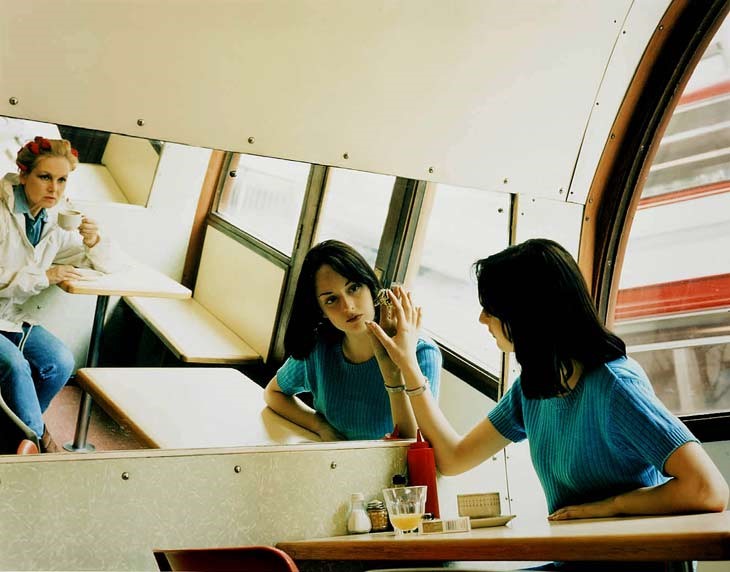


We had this image as an inspiration to make a 3-5 min long film. It was a process with many obstacles and challenges. First, the idea to make sense and still relate to the picture above. I think we had many opinions in the group how far to pull the idea. Romantic, sci-fi, action maybe comedy genre. My group had different main ideas, different thoughts about the ways of all ideas.


The film was filmed in two days. Files were saved on few hard drives to make sure, everything will be safe and nothing is going to be lost. Later on, I was in charge to deliver all visual files on the server with Victoria's help. That's so far about the process before the edit.


Have I changed thoughts about Avid since the first post?


I think it is very important how experienced you are before looking on new editing software. I mentioned AVID experience before on one of the first "Studio Shoot" posts. I would say it is very complicated editing software, it took me time to figure out how the tools are called. They are very different from other companies. 
My first "VIDEO EDITING" experience I gained when I was 16. It was Sony Vegas Pro. 
I remember it very as very complicated, futuristic and professional tool for videos. My friends were using programs called Movie Maker and iMovie and felt good using something much more advanced. I learned basics of video editing. Dual cameras, layering, 3D texts, stabilisations, cropping, panning, tilting, blending, key-framing clips and volume. I really thought it is something amazing...

Then I got in Adobe Premiere. A completely new world for me. I am not gonna lie - Using Premiere for about 1 month and coming back to Vegas Pro was horrible. I could not believe I was able to edit on Sony Vegas Pro before, it looked so cheap and there was nothing to use for professional editing. Using Premiere for about year I needed to step up more. So I began to learn how to use Adobe After Effects. Seriously, I did not learn it properly till I met Phil in UCA. 

The second year in university, still using Adobe sweets.

"Avid? Industry Standart, hah? Yeaaaa, right... what even is that???"
Opening Avid was like going back to 90ies, but I guess it was only because of the light gray interface. The learning process was very complicated. I would say it was because of how the things were called. I was used to Sony Vegas Pro and Adobe Premiere tool names. It was almost like learning a new language. You have to go through all so you know what the tools actually do and what Avid meant to mean with these names. For example, under effects, there is a tool panel like Illusion FX and without clicking on it I have no idea what even that means, is there 3D effects, maybe transition effects for the text or just textures...

Anyways, figuring out basic tools and trying to edit some sample files I had a bit of taste how it works. To be honest, I have to say I really hated it. I mentioned in the previous post about AVID that I can see how it is good in the industry. It is amazing with transcoding and transferring data from one computer to many others. In my opinion, Avid Media Composer is used for many huge films just because of the workspace. Many editors can work on one film without interrupting others.

Bearing that in mind I would not use Avid for my own small projects, short films or music videos. It is a pro tool for crews and TV industry.


---------------------- The Edit ----------------------


I often face a situation when something goes wrong in the most important moment. The first day of edit - Arturs is at home ill boiling in the bed with 38-degree temperature... How nice is that...

I knew I have to catch up with others in next Monday. Victoria helped me to import all the footage and at that point, everything was a mess...

A mess... where to start from? There I was, sitting on a red seat in front of 3 monitors.

Quickly I looked for a script. I watched every single video and listen to all sound files, wrote a note to each file, which scene, which slate and which take it is. The first day was basically defining files. I organized bins and files. replaced them. On the end of the day I had:

"Day 1" - All videos from the first day [ Renamed - repositioned in order]
"Day 2" - All videos from the second day [ Renamed - repositioned in order ]
"Audio" - Folio sounds
"Audio 2" - Tascam / boom mic records [ Renamed for each take]

...and nothing on the timeline yet.

I don't what exactly but I like a lot more how you can manage your files in Avid Media Composer than in any other video editing software.

---------------------------------------------------------------------------------


I said the software looked like from 90ies because of the interface so I looked up how to change that, setting > interface and made it darker. It looked more like "Premiere". I think bright interface just takes my attention where I don't need it. In a dark one, nothing else interrupts me. Maybe it is just in my mind, but generally, I felt a lot better and more focused on the whole editing process.


---------------------------------------------------------------------------------

Putting files on the timeline...

At the first glance, I had no confidence about what I am doing. I began with the 1st scene, put some in and out points, dropped on the timeline and did some synchronizing with a sound together. After 2 hours of an edit, I realized that I have to make more sense of my edit. Am I going for sad mood? Am I going for an experimental film? 
I looked through and some of the files did not make sense to me. There was one missing scene, which needed to be simulated by another hospital scene, I thought, it will be too obvious. I missed already one day being ill and I was in a bit stressful situation. 

Over sudden, I did not like the idea of the clock. I took that away and use another method of editing. I am not sure who said that but it keeps repeating in my mind, the film must look good even without the sound. 

I wanted to keep nowaday look, a bit futuristic, so I kept hospital scenes where the doctor passes them an iPad to show the results, I liked the fact how things have been changed over the time.

...THE STORY...

Things have changed and they will change more over the years. "Exhale, My Love" in my interpretation is twisted a little bit. Watching the footage I realize how cold are they without speaking to each other. It is not the script that makes like that, but the environment and their behaviors that make the mood. I loved the fact how everything in my film is pretty quiet and moody. 
At the very beginning, Elliot starts coughing and they appear in a doctor's office. Bella and he are very worried about the news, the possibility of cancer. On the first evening, she tries to cheer him up with a campaign. He starts coughing again, Bella calls an ambulance. New results show that he has a lung cancer. These results are serious and Bella cannot take that. She leaves him at the dinner. Next day, Elliot listens to a soundtrack. He remembers moments in winter, Bella smiling, singing to him. Bella hears the music, she comes to the room and leans on the wall. Elliot realizes that and helps her to stand up. He pulls her closer to the body and starts dancing. They both know that Elliot has to go soon. They cannot be together for long. Elliot inhales to say last words to Ella.


All that together.... and I was editing my "Final Edit" sequence.

I cut the clips without any sound and put on the timeline. I got used to tools that are on the left side of the timeline. Selecting single, selecting groups, deselect certain files or track, drag them, change them on the timeline. All tools are very different from Adobe. 

Colour correction. I did curves and basic contrast, brightness adjustments. Different scenes I used different filters. The light was not the same so used contrast and brightness as well. Later on, I offset my film using all four RGB curves and import a letterbox. When I had my letterbox on I had an option to move static files digitally. I tilt few static shots so there is a slight movement. Another reason for the letterbox - I have always the feeling that can't see all information if the image or video file is closer to the ratio 1:1 (square). I think - because how our eyes are positioned we need to have a square for each eye. That would be like 1:2. I feel like 16:9 is not really what I want to focus on. when the file has this frame around I am focusing more on the picture where the operator wants me to look at.

For tablet shots I used pan, tilt, resize and rotation tool to zoom out. I changed keyframe style as well so it is not so linear, but is very smooth and nice. One of the following shots I used stabilization FX. For Elliots dream scene, where Bella is in the snow, I used film grain illusion FX, I used frame morph so frames blend in next to each other. For particular shots, I used also glow effect. 

The sound was difficult for me at first. Although I had everything neatly organized I had issues with synchronizing sounds. In like 4 hour time I got my way around and everything was in time. I keyframed volume and blended sounds together. I used bensound.com to download a music file "Sad Day".

Credits were easy and especially rolling ones. I think Avid has thought about this part. The title sequence was very easy to work out. I liked the process of it.

---------------------------------------------------------------------------------

I think I gained a lot of new experience working with Avid Media Composer. Not only that but also working in a team made me more prepared for other shoots...

 In my opinion, there is only ONE THING I would like to change during the studio shoot. What I saw, I didn't like how my teammates were worried about things on the side. I think the major issue was that the wasted time on planning. I think everything is amazing if you can see how everyone know his role. I studied my role through and I know exactly where I have to be, when I have to shoot, who I have to listen to, who I can ask for help and so on. If you know your role inside out there should not be any misunderstanding and everything should go fluently. 

I enjoyed my group and I am happy that I learned new software just in few weeks. 


The story behind unknown dreams. 

There is only one concept, but two ways how to play it. Therefore I will be introducing the main idea first.

There is a guy or a girl who has danced all life. The dancer was very good at it, a talented and strong competitor to others. It wasn't only a hobby, it was a lifestyle, it was everything. Life for her or him changed in only one day. A wheelchair is not what you want in your dance career. You still can dance, but there are limits that may hold you.

DRAWING OR PAINTING?
PUPPETS?


DRAWING OR PAINTING- The Story Behind Unknown Dreams

The actor will be filmed in two different environments. First, an apartment, second the green screen studio which will be made in the post as an endless space (Dream).

1. The actor prepares his or her workspace for painting or drawing. Poors some water in the glass, takes pencils and brushes, clean the paper, find a rubber, sharpen pencils, find some colours. 
2. Few strokes on the paper, a B shot and back to the drawing or painting, seeing a person who could be called a dancer. 
3.  At this point, the artist falls into a dream...
4. It is himself in the endless space. He or she is on the floor, slowly standing up and paying a lot of attention to leg movements.
5. Movements are slow and gentle, nothing much with legs, mostly arm movements. 
6. The dance becomes active, very strong leg movements, wide and fast.
7. At one point it becomes so energetic and precise.
8. But... Soon he or she runs out of energy, especially legs. Slowly sits down and still moving arms.
9. Filming face and it morphs from the dream to an apartment.
10. Next shot - slides out of this drawing or painting which already finished, and the camera reveals, that the dancer in the dream is disabled, sitting in a wheelchair. As an alternative, we can use crutches.


PUPPET THEATRE- The Story Behind Unknown Dreams

The actor will be filmed in two different environments. First, an apartment, second the green screen studio which will be made in the post as an endless space (Dream).

1. The actor prepares his or her workspace. He or she finds sewing kit, puppets, strings, a bit of paint and some glue.
2. The doll is attached to these strings. The actor paints some new facial expressions and cleans the puppet. It starts to play around with it.
3.  At this point, the artist falls into a dream...
4. It is himself in the endless space. He or she is on the floor, slowly standing up and paying a lot of attention to leg movements.
5. Movements are slow and gentle, nothing much with legs, mostly arm movements. 
6. The dance becomes active, very strong leg movements, wide and fast.
7. At one point it becomes so energetic and precise.
8. But... Soon he or she runs out of energy, especially legs. Slowly sits down and still moving arms.
9. Filming face and it morphs from the dream to an apartment.
10. Next shot - slides out of this drawing or painting which already finished, and the camera reveals, that the dancer in the dream is disabled, sitting in a wheelchair. As an alternative, we can use crutches.

TECHINAL INSPIRATIONS


I chose two very different videos that represent art in different centuries. The thing that I learned comparing them, no matter how old or new is the video - the idea will live further on. It might be and most likely is done again and again in different ways, using techniques that have never seen before, using post-production that may change the original message in many forms.

Dance is a performing art. It is like an active meditation. For me personally, dance is a relaxation, it is a circulation of energy (I am using my energy into physical motion and gaining it back through happiness). In my opinion, dance is like a music, it has its sequence. Dance can be a chaotic, coordinated, performed individually or in groups - it has no boundaries. Dance can symbolize deep feelings or everyday jokes, the value of which people do not think so much facing different problems or fun situations.


FIRE FLIGHT

Fire Flight is a promotional music video featuring the dancers from The Phoenix Dance Theatre in Leeds, England. The project was shot on the Phantom Flex camera at 1,000 frames per second. It was produced by Ink Films (www.inkfilms.co.uk) and the creative and director by Uber Agency (www.uberagency.com).


Directors idea was to add fire in the post to make it look like dancers have been set alight. The project took just over a year to complete with 6 months being dedicated by Ben Daure to create the rendered fire in Maya. Daure had never even opened Maya before and it was Chris Birks of VTR North that showed him how to use the program allowing him to focus on creating the fire post work. The video was edited using Maya, After Effects and Adobe Premiere.

Phoenix Dance Theatre is the UK’s longest standing contemporary dance company outside of London. I think the video stands out and works for the dancers how hard-working they are... Phoenix Dance Company was formed in 1981 by David Hamilton. Almost 40 years of work has been filmed in this art-piece to reach attention to their achievements over the years.

Watching this video, I try to notice all those tools they have used to implement the movement. VFX has been used a lot and it works amazing bearing in mind that the editor has never been using Maya before. I like the fire because it reminds my eyes where the motion was a second ago. It leaves a trace after every motion the body does. It is something that performer is in front of every thought.

GIRL HUNT BALLET

Fred Astaire and Cyd Charisse, 1953. This dance piece is from the musical film “The Band Wagon (1953)”.

First, it reminded me music videos of Micheal Jackson. It is very different from the first video. It is more theatrical performance art. The power the man use to show his personality has been reflected using the group of people. I think it reflects world's idea what makes his or her personality. It is not the position but the people who are around you. For example, the leader of the country can come in the room and no one will stand up, later on, another leader is coming in and everyone will stand up and will give an honor to him or her. It is about the respect from others not about the name of the position. In this dance video, it is well performed. The main guy is in a light gray suit. Everyone around him is in black. The red colour in the room sets the mood to anger, to some actions. He is challenged later on by a lady in red dress. That is his opportunity to be more powerful over others. He uses it and there is a competition between both dancers. 

It well though out. Starting from lights and environment. Using different outfits, ages and using specific space. ending with an actual story behind it, ending with changes and interesting actions that turns out differently than expected.

In the piece, you are viewing five separate screens working as a vocal circuit. Four of the Screens act as distributors of information. Starting from the left (Screen 1) something is said, moving along it reaches the middle screen, upon receiving the news the middle screen reacts, the reaction is later heard/seen by another passing on the story. The middle screen acts as a Breeder and Target for gossip it plays a victim of rumour. Shocked by the words it has come to hear, it addresses the viewer with the words “just between you and me” in hope to seal the spreading; in natural fact, nothing stays private. The circuit loops again, middle screen reacts with anger “Beat the shit out of a pillow” yet making another headline.


The main concept is not about who is in the beginning or in the end. It is all about others who are in the same chain of information. One of them can mislead and draw people to the wrong conclusions. It is really about telling the wrong idea. When you think how someone has given you the wrong information you also think of synonyms such as betray, deceive, dupe, fudge, misrepresent, temp, bait, bluff, lure, scam, hoodwink, deceive, entice, seduce, victimize, suck in, pull wool over eyes, manipulate.


Rumours have been spread all across the world every second. It is an infinitive circuit that cannot be cut. There always will be a source and a point where things are going to be said. 

Our first installation was inspired by a Chinese saying, referring to the three monkeys of their divine pantheon. See No Evil, Hear No Evil, Speak No Evil. In the first idea, we did it simply, A source, three monkeys in the middle and the speaker at the end. Easy to understand - The source wants to say message which goes and reaches the speaker. The information can be truth and it can be misleading because of three persons in the middle.

We developed other ideas keeping the main concept of three monkeys. To represent the more precise real-life situation, we put the main character in the middle, but this time, this character is both - the SPEAKER and the SOURCE.
Why I think it is more realistic? In the first idea source wants to give a message itself, but in another - someone just heard the source saying things and passing them further. Sooner or later the source will know that there is romour of his spoken word. Reacting differently each time, the main character in the middle will be saying what he has heard. the information he has just said gets passed around again. It is almost like an infinitive loop that will never end. Messages keep travel and changing all the time to make the perfect form and expression.

Studio shoot begun with a post weeks ago 'Role- Camera Assistant' - that was my chosen role to research. We had to research individually each department to present for everyone what the roles in film industry actually means. I was happy with my role, because I am technically interested in gear and techniques to use for filming. I have always been passionate about pushing the limits of quality.  I like to generate ideas of stories and main concepts, but it has never been as big as it is about my obsession for technology.

Camera department is my role indeed. I like the looks I could technically achieve. I like to challenge myself to make the shot more stable, more crisp, more detailed, more dynamic, more interesting and exciting. In my spare time I am reading a lot about new editing styles, new lighting, technology and filming techniques. I love to read articles of new Adobe Photoshop updates, how old tools can be used to achieve something new. There is always something new to learn. I am following latest updates of cameras, I am loving to learn new features. For example, I worked with GH4 and that was a good reason to find out what its features means - v-log and 4K MAX. I had what is the difference. Soon I was on articles and YouTube videos. I research from very beginning to advanced controls of V-log and 4K Max features.

I like to always be on top of everything that lately comes out. Before something has been released I have most likely already take a look on specifications, researched certain parts of camera's or other gear's features and trying to understand without looking at actual device. 

I guess my friends call me crazy because of doing it, but that's how I see art behind film, sound and photography.

Returning back to roles, for studio shoot I picked the role - Camera Operator. I guess could not wish any better, I was happy with my role at the very beginning.
 Pre-production was a pain for everyone I guess. I was pretty calm because I knew that my real work will be on the scene. Although I was CO, I helped Tarald a lot with the storyboard.

I drew storyboards with a help form Ivan, Natalie and TJ. When they were done I made them digital. I also helped Umor with lighting plans. We discuss in groups and explained those to Anne Parisio. I took part in lighting plans confidentially cause I had experience on sets like this before. Mostly for small interviews in Latvia, but still - those were whole scenes for full lightning including reflectors and diffusers. I used to help out gaffer at local television in my hometown Talsi.

As I mentioned before, I love research a lot of new techniques and gear, so I have seen many lighting situations and problems via Youtube and Fstoppers.com. I am learning film standards when I do have spare time.
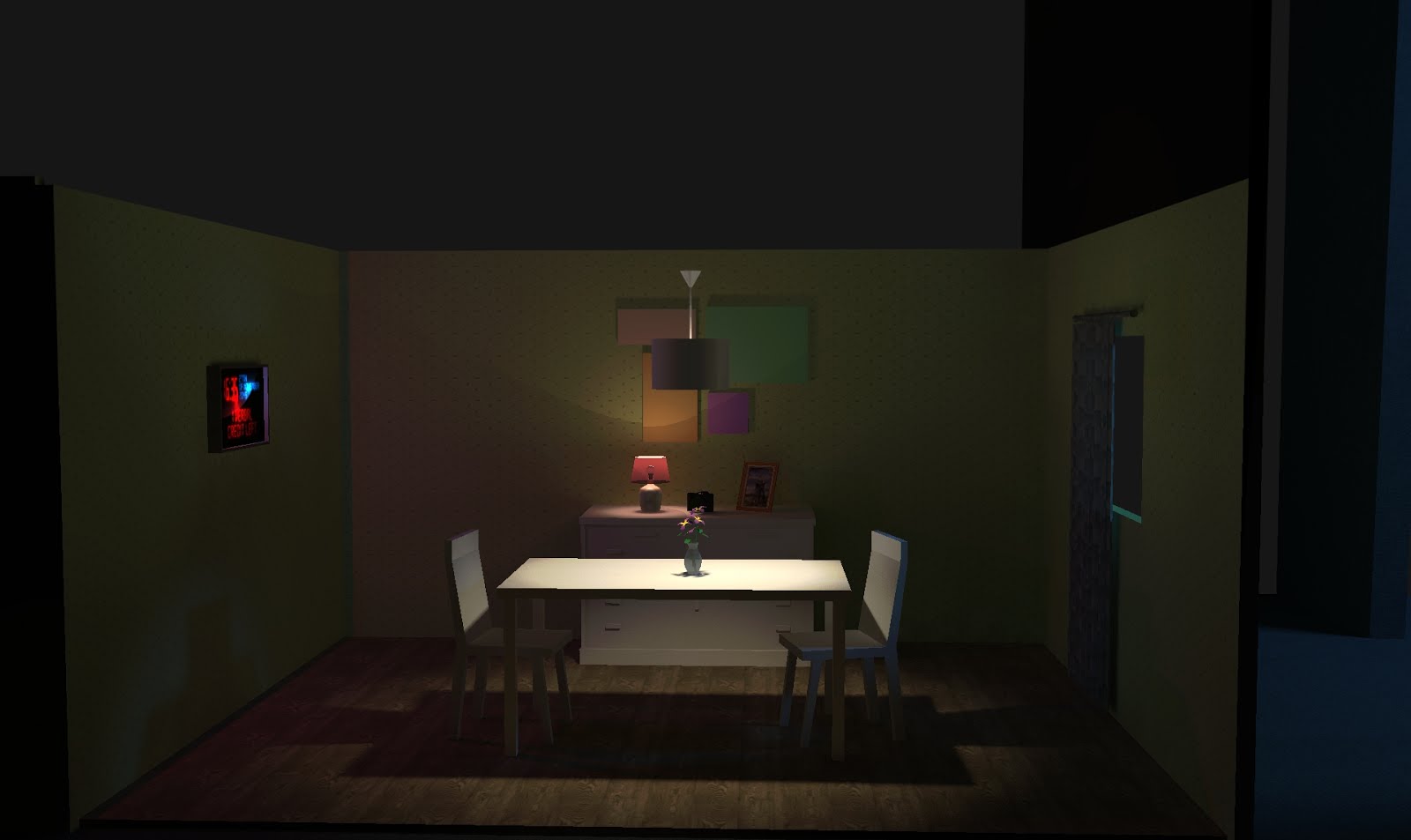
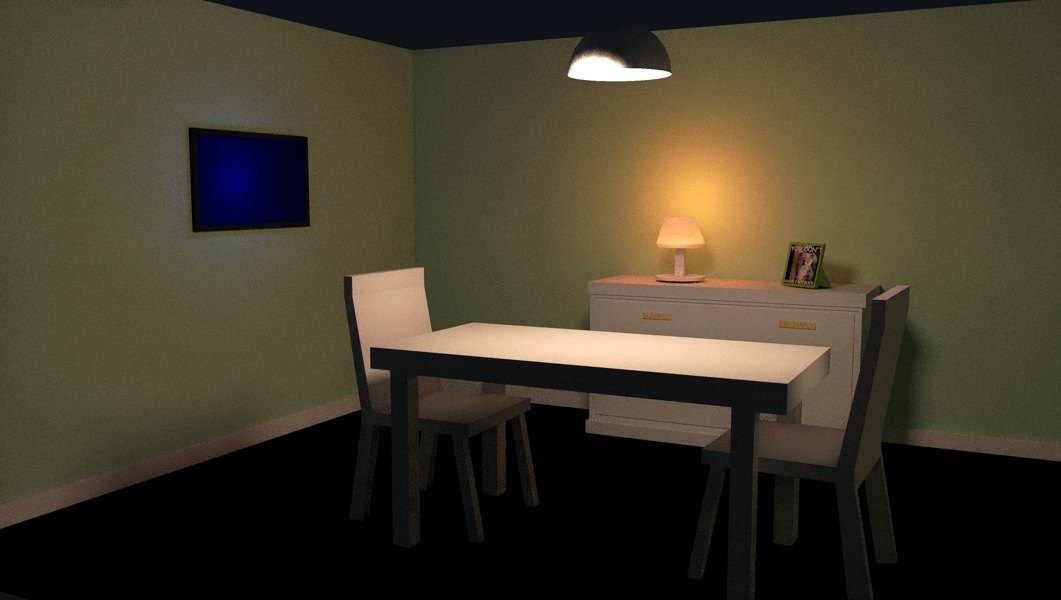
 While everyone was into polishing the story, I used my time for 3D project using SketchUp Pro.
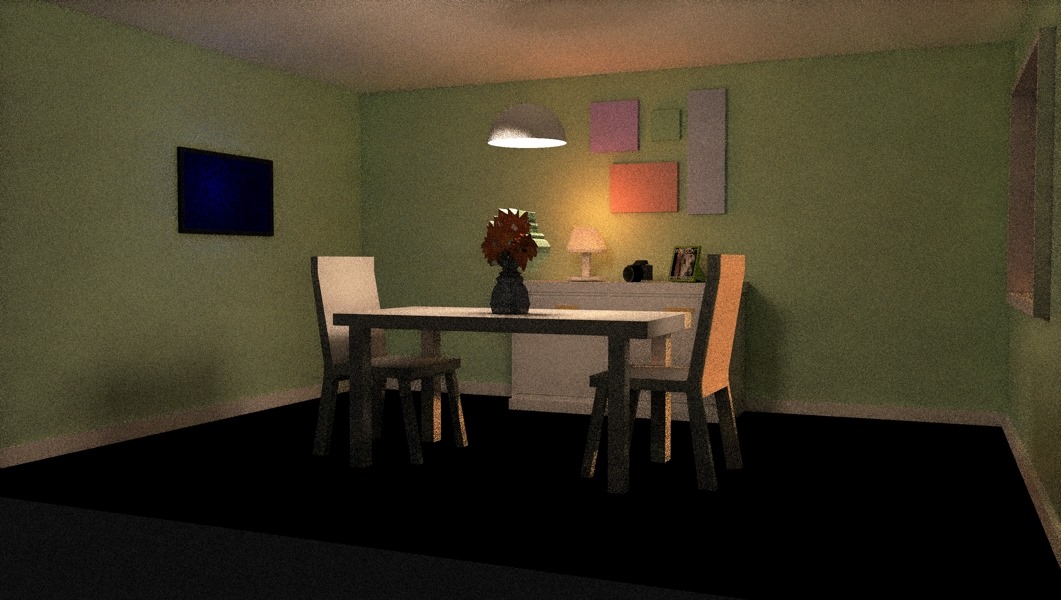
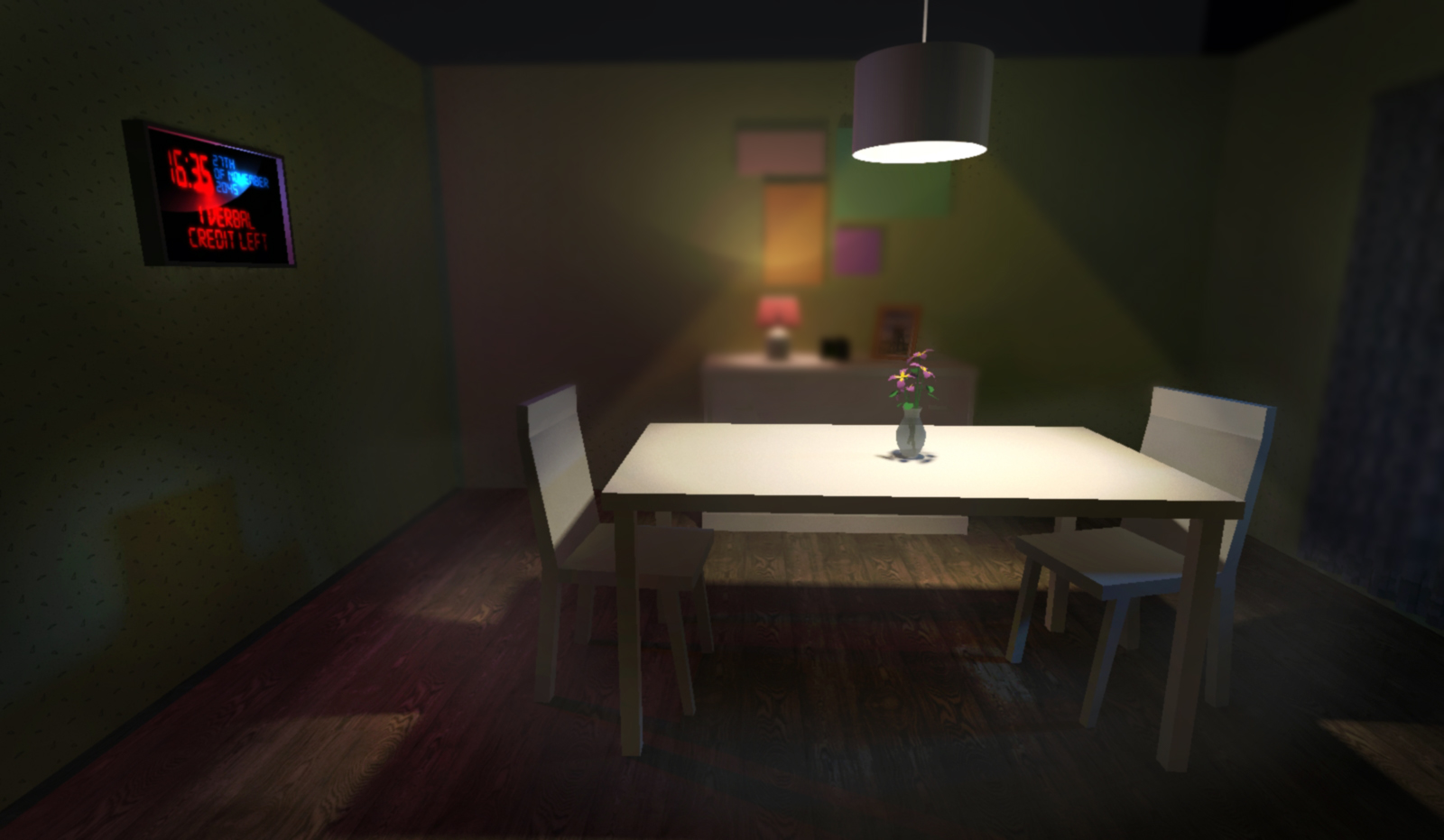
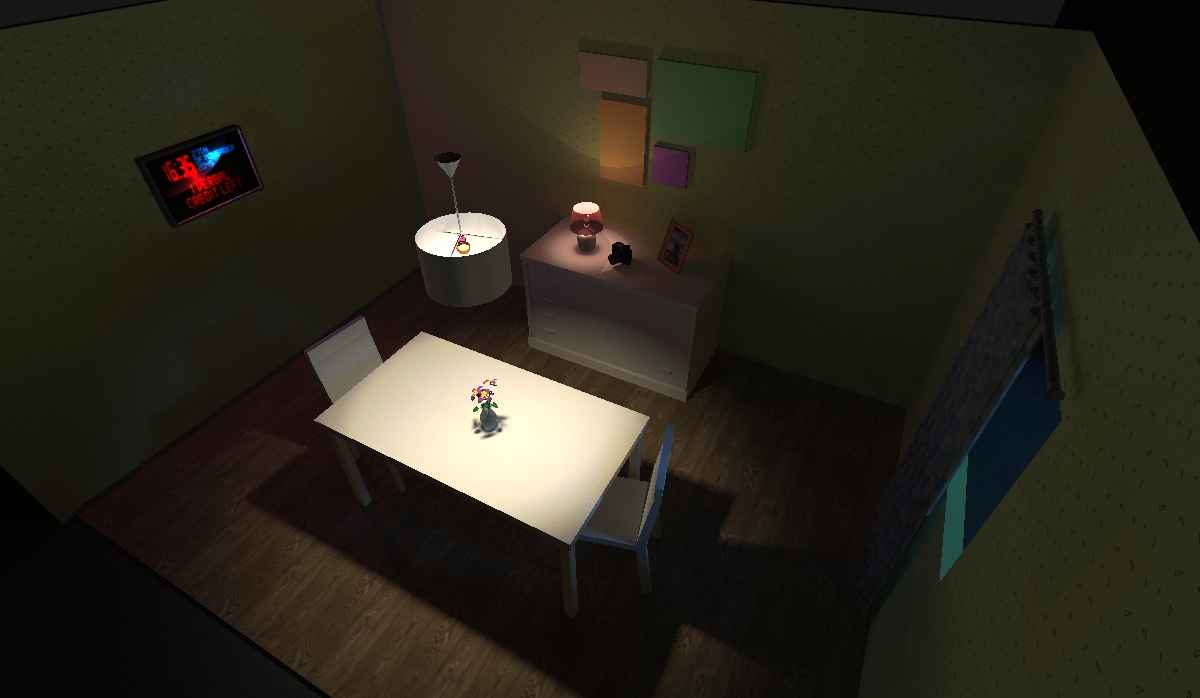
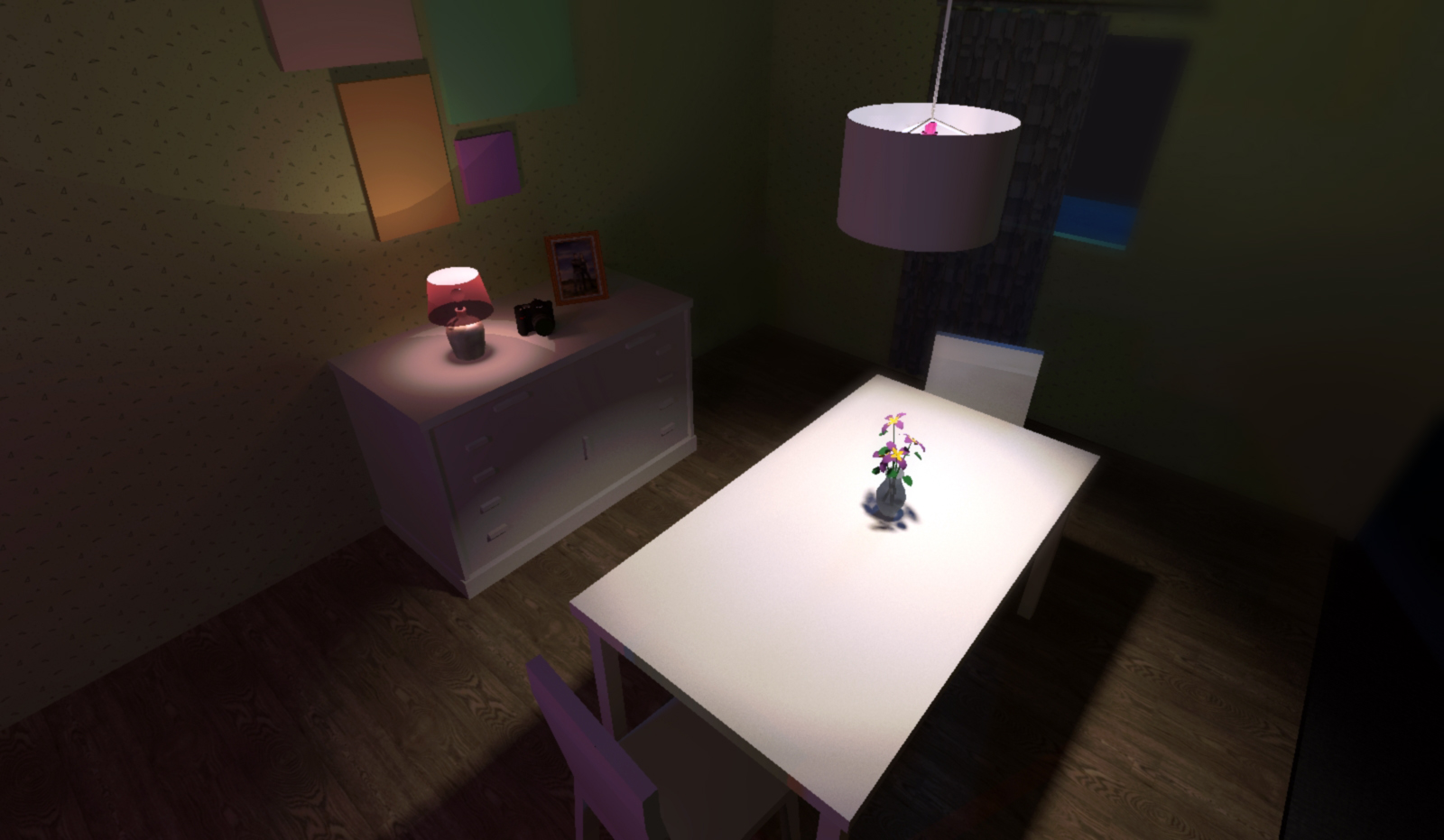
I made a whole set to show previews for possible camera angles and lighting. These sketches and previews from 3D program is at the bottom of this post.

WAS 3D NEEDED?

It was not necessary, but in my view it helps a lot for whole team to understand and feel a bit of the taste what they are going to look at. It can help a lot to see some problems, possible movements, angles and actual space they have to bear in mind.
I did it to make sure I am helping my team as much as possible. We have to put our support and time as much as we can to make our film successful!

Another digital thing I did together with Preston. Something must be on TV's screen. Animation. Preston did design for the clock and whole system which shows word count. My role in this was to make clock alive. I used Adobe Photoshop, After effects and Adobe Premiere to easy change the certain time and move alerts. We setup the word count and made animation so it looks interactive.
...This only one test for alarm. I made folders of files to make sure there is no mistakes and animation makes everyone happy.


Accelerate storytelling with the tools embraced by top movie, television, and broadcast editors. And power through HD and high-res editing. With that kind of inspiration we were inducted to Avid Media Composer. I have been working with 5 different video editing software so far and here I explored new editing software for the industry. On the first glance, I really did not like the "old-style" interface. All tools made no sense at the beginning. Looked very complicated and took a lot of time to edit.

"Fix color or set the tone and mood with built-in color tools. Quickly match colors from shot to shot using NaturalMatch. Correct color with precision thanks to advanced color space processing. Get fine control with animatable color correction. Speed up your color work with hands-on Artist Color control."  That's how Avid official page advertised their software. I have been using Adobe Products more than 5 years and I can say that it is much easier to colour correct footage in Adobe and it's plugins. It is more visual and instant preview compared to Avid. Bearing in mind that I can use plug-ins like Magic Bullet looks which gives creative tools to apply for colour correction and effects.
The image of one of the tutorials. We were editing two person dialogue in an office. We had few camera angles and needed to edit them in a certain order so it is pleasant to watch. Editing is art itself. You have to make sense and actual taste of the way how feelings work to each other. Using only cuts you are in charge who from both character is more dominative. You can make stressful or calm environment using time ad only tool for cuts. Different  styles of editing can completely change the mood of the whole story.

It is easier to import, faster previews and I prefer tools like cut, mark, stick together. They just work much smoother.
Using Avid for few week I have pulled out some good points to mention. Using it for broadcast and having quick simple edits it is perfect. Audiences today expect content to be delivered in the format in which they want to watch. Live TV broadcast. Streaming media. Blu-ray or DVD. On demand. On a mobile device. With Sorenson Squeeze Lite—included with Media Composer subscriptions or as part of the Media Composer | Production Pack—you can optimize media for the highest quality playback online or on disc. 
Not only fast transcoding is a huge benefit, but also sharing whole projects real time for editing. When it’s crunch time, collaboration is key. Media Composer makes it a breeze. Share media, projects, and bins to complete projects on time. Share assets using Avid shared storage. Collaborate with Final Cut, Premiere, and other editors. Share sound mixes with Pro Tools editors. Integrate directly with iNEWS and ENPS systems with the Media Composer | NewsCutter Option. And extend real-time production everywhere with Media Composer | Cloud.

Apart from sharing media and transcoding to life stream I really can't see reasons why it is better than Adobe products.  In my opinion, I will use it on big production teams where we have to work fast and simple as possible, quick colour editing, quick transferring between other editors and ease access to video materials. I have to agree that Avid has much better in preparing material for editing, it has all support plugins for certain camera formats. 


MAPS AND NETWORKS
initial ideas and inspirations


Over the past weeks I spend in tutorial viewing different artist work and discussing the topic of mapping and networking I gathered it can be a very broad subject; take Ian Sinclair who took a psychogeographer route; marking a small chunk of London inspecting and walking around its perimeter understanding the surrounding and environment to compare how it connected to the people living within the area. It wasn't until I was presented with Bruce Nauman's use of televisions within his work- knowing it had been used many time's before I didn't shy away from the idea. I wanted to use screens, regardless of it being a laptop/tv/monitor/- I wanted to look at the spread of information; how it becomes recycled therefore changed and re-edited through the use of different sources; misleading and fooling the man sitting in front of the screen. Below a sketch demo's the setup.


"Hear no evil-speak no evil-see no evil"
props:
-long table- pale white
- five televisions/monitors
- six actors
- baseball bat
- large white room
- projector


The projection, as it follows: Left to Right
All screens turn on.
Screen 1: a young girl
Screen 2: a police man
Screen 3: a journalist
Screen 4: a news editor
Screen 5: a news reporter


Starting from screen 1 the young girl looks distressed and whisper's something to the policeman in screen 2 the policeman later whispers to the journalist in screen 3 journalist takes a note and whispers the information to the new editor in screen 4 the new editor finally then whispers to screen 5 in the which the news reporter out loud and openly present the story (info). Mid way through the report the young girl in screen 1 begins to yell and deny the information the news reporter is giving to the listener.
 FROM THIS POINT ONWARD- there can be two endings.


^a digital representation of the visual instillation (lol)
by Arturs Reinholds


+ as havoc begins to arise between the TV's an elderly man ideally in a suit walks into frame carrying a baseball baton, he stands behind Screen 1 and smashes the television, therefore silencing the girl and preventing the truth and original source of information from being spread.


+ as havoc begins to arise between the TV's an elderly man runs into frame unplugging the sockets of Screen 2, Screen 3, Screen 4 and Screen 5. "who care's anyway?" he explains walking off shot, as the the young girl in Screen 1 suddenly comes to peace and quite.


-SECOND LIFE -
Second life is created around the use of


- WE MADE YOU -


INSPIRATION AND SAMPLED RESEARCH-

Inspirational artworks by Valie Export, Kutlung Ataman, Charles Atlas and Andy Warhol.

Valie Export, video installation at Charim Galerie, (2012)
This exhibition presented a thirty-year survey of photographs and videos documenting VALIE EXPORT’s early performance works, digital and conceptual photography, expanded cinema, large-scale video installations, and films.

Kutlung Ataman Paradise (Installation at the Orange County Museum of Art, California), (2007)
24-monitor video installation on DVD dimensions variable, looped Edition of 5 Paradise was commissioned by BAK, basis voor actuele kunst, and Treaty of Utrecht, Utrecht, The Netherlands; the Harris Museum and Art Gallery, Preston, England; Lehmann Maupin Gallery, New York, USA; the Orange County Museum of Art, Newport Beach, USA; and the Vancouver Art Gallery, Vancouver, Canada. Paradise is produced by Saatleri Ayarlama Enstitüsü / The Institute for the Readjustment of Clocks and Lehmann Maupin Gallery, New York LM10120


Charles Atlas - Discount Body Parts. De Hallen Haarlem (2012)


Installation view of Andy Warhol: Motion Pictures at The Museum of Modern Art, 2010.

Currently on view at the MoMA is a tightly curated sampling of Warhol’s Screen Tests, shot between 1964 and 1966, as well as his films: Kiss, Sleep, Empire, Eat, and Blow Job. The show was conceived of in 2003 by MoMA curator Mary Lea Bandy and was exhibited as Andy Warhol: Screen Tests. After moving to Berlin’s KW Institute for Contemporary Art in 2004, the show traveled internationally for five years as facilitated by PS1 Director Klaus Biesenbach. All films have been transferred to video for the installation but there is still something archival—“filmic,” as Bisenbach says—about the footage.

MORE: http://artobserved.com/2011/02/go-see-new-york-andy-warhol-motion-pictures-at-moma-through-march-21st-2011/comment-page-1/


As a final file we exported "LOST AND FOUND". It took us a while to decide the title for our film. We had many ideas but not the same taste.
I think we find it really hard to set roles. Our team had people that knows each side of film more or less. In my opinion, next time we have to fix roles and stick to them so there would not be any misunderstandings. Everyone was planning, everyone took part in filming and sound recording. We did editing mostly together.

For next time I will make sure that our technical side is alright, I failed when I tried to repeat same settings for second shoot. I pool too much ISO, therefore I needed to fix it in post. We were not prepared for lighting our found objects so alternative was my small LED light.

Good thing was that we begin to work early, we did not rush and successfully spent a lot of time for finding items. We did it slowly without stress. Our editing was quiet fluent except few bits when we couldn't stop argue about small details.

All together I feel it was a great experience for me to work in team again. I am kind a person who is used to work alone from scratch. I found it easier to work individually. It takes time to learn how to work in a team successfully. Overall we did a good job.

WE FOUND OBJECTS - WE GAVE THEM A PURPOSE IN THE FILM


Having a lot of postcards scanned and items filmed we imported all footage into the After Effects project. Colored all videos making film more pleasant to watch. We also had recorded sounds which were associated with the items, for example - Birds, water, knocking, leaves and zip-wire. On the last day recording sound we had success, we met a guy who was walking out dogs and they played around barking and running around. I did a lot of sound recording, but as our roles weren't fixed we all took part in sound recording later on. In the project we used Zoom H2n recorder. Trying to avoid too much ambient noise and having clean sound effect we tried to operate mic gain.

For audio edit we used Audition, applied effects like panning and reverb. We made zip-wire soundtrack sound like tape. Post-production was interesting but in same time a bit stressful because we had a lot of arguments. Everyone had ideas and we had to deal with our characters.

During editing I worked on snail trail animation. Tarald helped me a lot with fire and snail trail animation. For titles in the end we tried to make similar effect to VHS footage so it match the text in the end.. There is a text 'Batt' that is original alert for low battery.

Synchronizing sound was not easy part, it took time and patients. We had only few technical issues, but they were not big at all.


That is how it looked in the Adobe Audition. I recorded and mixed everything in 32-bit 96000 Hz and later on down sampled to 24-bit 48000 Hz.
I did a lot of reverb, panning and volume key-framing.

All I wanted to achieve I did. I wanted surrounding sound, sound that makes you feel that you are in the same place with the objects. I did a story that builds up slowly and ends quickly after screams. I learned about level controls reading two books Sound for Digital Video by Tomlinson Holman and Arthur Baum & Theory and Practice Film Sound by Elisabeth Weis and John Belton. both books describe that I should keep my levels down and make very pleasant sound, in that way I can make my audience focus on the actual subject.

My final edit (-10 dB):


Seeing picture of a person sitting on a chair and with widely open mouth lets me think only about the screams. I was looking for story. Therefore, I decided to leave the screams at the end. I wanted to build up the sound, showing how the person gets where he is painted. I love audiovisual parallelism, it helps me feel the image, even if it is still, I can picture different patterns, feel the material, feel the room or space.

For tips and tricks I chose to look up in few books. For actual form and rhythm I took notes from 'Cinesonica: Sounding film and video' by Andy Birtwistle. Read how important is actual space where the sound is recorded, for example, in a room it will be more high and low pitch noise, where outside it will be more of low and mid frequency sound.

MAKING A STORY

In my mind was going only one idea. How the person got there? Because of facial expression that shows screaming I made another person in the room.
I star my story with a person walking outside while it is raining so it would be clear that it is completely different environment. The person grabs keys and opens the doors. While it washes his hands, there is another person pulling his fingers on the glass. Trying to make noise and receive response from another side. He is more like a hostage who tries to escape, but the person who just came in wants him to sit down. He has the power!

I would like to use something that sounds like electric chair. Connecting wires and make the Pope screaming. Last minutes of his life.

RECORDING

OUTSIDE - screams, doors, keys, rain.
INSIDE - scratches, voice, glass, doors, electric impulses, chair, breathing, running water.

EQUIPMENT - ZOOM H2n and ZOOM H1 recorders.

Using headphones, I made an effect, that it feels very realistic. I recorded with Zoom H2n to make 3D sound. Whispering and screams are made stereo into real environment. for water, breathing and door opening I used pan effect.

Sorting out files:
 Named them:

My sound project is based on the portrait of Pope Innocent X, is an oil on canvas portrait by the Spanish painter Diego Velázquez. Pope Innocent X was born at Rome, 6 May, 1574; died there, 7 January, 1655. His parents were Camillo Pamfili and Flaminia de Bubalis. The Pamfili resided originally at Gubbio, in Umbria, but came to Rome during the pontificate of Innocent VIII. [1]

I chose Francis Bacon's most famous paintings inspired by Velasquez's Pope Innocent X portrait. [2]
The work shows a distorted version of the Portrait of Innocent X painted by Spanish artist Diego Velázquez in 1650. The work is one of a series of over 45 variants of the Velázquez painting which Bacon executed throughout the 1950s and early 1960s. The picture was described by Gilles Deleuze as an example of creative re-interpretation of the classical. [3]

Diego Velazquez's painting on the left and Francis Bacon's on the right.

The insertion subverts the encapsulation of power and self-assurance projected by Velázquez. The screaming mouth, isolated from other facial features and divorced from any narrative context, suggests existential agony. The pathos of human vulnerability and loss of faith or conviction are accentuated by the precisely rendered space frames in many Bacon images of popes, which make the figures register as ‘enclosed in the wretched glass capsule of the human individual’, to cite the evocative phrase used by the philosopher Friedrich Nietzsche in The Birth of Tragedy (1872), one of Bacon’s favourite books.[2]

I was more into the Popes biography, but it seemed really secret. Therefore I choose to find out why Francis Bacon wanted to show him screaming, what was the reason and is this is somehow interacting with his sexuality?

Bacon’s obsessive reworking of the papal theme suggests that it may have possessed further significance and perhaps psychological charge for the artist in relation to his sexuality. It has been remarked that the Pope in official garb is in a sense the ultimate drag queen, or less literally that depictions of the Holy Father, known in Italy as ‘il Papa’, may encapsulate Bacon’s traumatic feelings about his own father. The latter was a conventional, inflexible military man to whom the teenage Bacon had felt sexually attracted, as he recalled many years later, but who brutally admonished and rejected him when he discovered his son’s homosexual inclinations. Such speculations about the possible ‘subconscious’ content of the pope pictures involve perhaps a rather crude application of the methods of Freudian psychoanalysis. Once again it is neither altogether possible nor helpful to pin Bacon down.

[1] http://www.newadvent.org/cathen/08020b.htm
[2] http://uk.phaidon.com/agenda/art/articles/2013/february/08/the-truth-behind-francis-bacons-screaming-popes/
[3] https://en.wikipedia.org/wiki/Study_after_Vel%C3%A1zquez%27s_Portrait_of_Pope_Innocent_X

Finally I am done my Twin Screen and I can summarize all I did.

My Idea
My vision of human and devices. I want to show how much time people are spending using their devices everyday. How big influenced they have on us. Focusing on these things I am going to show how people are looking without them in same position. Representing how much they actually are wasting their own time.

Visuals
I included few animations made from many layers. Real life footage and textual information.

Equipment and Place to film it
All footage is filmed with Nikon D5100 on campus flat. I also used a tripod for most shots. For sound recording I took Zoom H2n.

Explained Visuals:
At the beginning I am sleeping and waking up slowly, nothing unusual. On the other screen there is remaining time till I am going to wake up. A moment later simple animation changes to my body info. Sliding text on one side is actually Sterner-Elser empirical molecular formula for an average human body.
H375,000,000O132,000,000C85,700,000N6,430,000Ca1,500,000P1,020,000S206,000Na183,000K177,000 
Cl127,000Mg40,000Si38,600Fe2,680Zn2,110Cu76I14Mn13F13Cr7Se4Mo3Co1

Animation includes heart rate monitor.

Then my video starts explaining my idea. I am doing same thing with and without my PC. There were many attempts to do it in same time as I did it once. Synchronizing motion was really hard during this project. 

Seconds later I am watching a video. It is an animation I made from scratch. The animation I am watching symbolizes that it does not matter how educational is the things we are looking online, we just spend hours to look at any forms of information, even if it's not important or fun. 

Animation was inspired by Of Monsters and Man


Having this on one side, on another it is my eye. I used motion tracking and different transition options for lines and textual information that comes up watching the screen. 

After animations transition in laptop's screen I am doing handheld camera movement for many time to get as similar shot as possible. And again, one screen side shows devices, another without devices. It is hilarious how would we look doing that with no devices... 

So I did my checklist. PC with animation video, laptop with animation video, mobile phone using social network and mobile phone used for music.

At the end everything rewinds. My explanation for that - I wanted to throw back everything, so the viewer could think how he would spend his day, is it going to be time using devices or having healthy breakfast and chatting with people in real life.


*** Effects between the shots - static or white noise is made because of fact that no technologies are stable to use yet. Anything could happen and our data is not so safe.


Explained Sound:
I have to mention that all sound is recorded after editing visuals. Piano sound is Royalty Free music by Darren Curtis. Everything else is recorded afterwards with Zoom H2n voice recorder. I made a lot of sounds by my voice. I did wind sound just manipulating my voice. I did all mouse clicks, chair sounds after. Recorded static noise and for the end. It is a sound from water tap. Recorded running water is put reverse, so it sounds scary.


Sounds like water, mouse clicks, voice effects, steps, tapping on walls, scratching carpet were edited on Adobe Audition.
One of my favorite sounds were manipulated watch at the beginning counting seconds. For many sounds I changed time, pitch and balance. I took noise for some and bring the frequency very high.


Reason for mood is because of first research of how serious is our future. If it continuous like this it may go insane. Technology is taking over human quickly which is quite scary already. Our communication with others starts to become artificial. It feels fake through modern technology.